×
×



Even thickness is the core quality standard for finished plastic sheets, whether they’re used for thermoformed trays, transparent optical panels, or food-grade rigid substrates. A lot of factories invest big time in the whole plastic sheet extrusion production line but overlook the matching issue of the gear pump in the supporting equipment. This leads to thickness fluctuations, a high scrap rate, and unstable long-term production efficiency.
Without a properly matched melt gear pump, even high-end plastic sheet extruders can’t completely eliminate the inherent flow shocks during the extrusion process. This article serves as a practical guide for gear pump matching. It systematically analyzes how the gear pump regulates melt flow, sums up the standardized pump selection rules, and shares the actual operation settings. Also, it covers the key factors to evaluate when collaborating with plastic sheet extrusion production line suppliers, helping manufacturers eliminate thickness defects at the source of the plastic sheet production line.
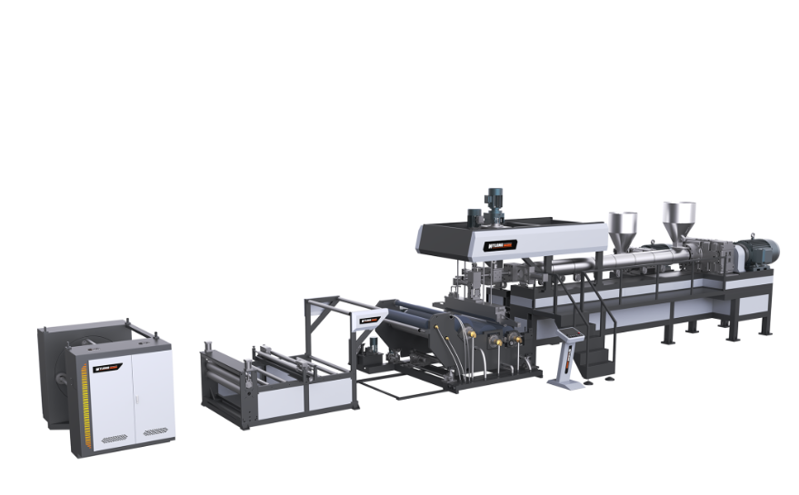
To understand the pump matching logic, we first gotta figure out its core regulating function and the root cause of pressure instability in the standard sheet extrusion process.
Traditional single-screw extrusion relies on the screw rotation to push the molten polymer. In the extrusion steps mentioned in the reference materials, pressure fluctuations are inevitable. The gear pump is installed between the breaker plate and the extrusion die. It uses a positive displacement gear structure and delivers a fixed amount of melt per revolution.
Two core stabilizing mechanisms ensure the consistency of the sheet thickness:
Eliminate pressure fluctuations: The pump can isolate the instantaneous pressure generated in the extrusion and plasticizing areas, reducing the fluctuation of the die inlet pressure from ±10% to less than ±1.5%.
Constant flow metering: The flow output is linearly related to the pump’s rotation speed, which can eliminate the thickness inconsistency along the machine direction, a problem that most sheet extruder operators face.
For manufacturers aiming for precise tolerance control, using a suitable gear pump to optimize the thickness stability of the plastic sheet extruder can directly reduce the scrap by 12% to 28% when producing thin-walled and medical-grade sheets.
Thickness inconsistency rarely results from just die adjustment. We’ve classified and organized the common upstream flow disturbances into a clear table:
| Fluctuation Category | Specific Triggers | Thickness Defect Performance |
| Feeding instability | Hopper bridging, uneven pellet mixing, regrind proportion shift | Periodic thick-thin waves on sheets |
| Plasticizing deviation | Over-fast screw RPM causing excessive shear heat, uneven barrel heating | Local thickness deviation & surface bubbles |
| Back pressure drift | Blocked screen packs, worn screw flights | Slow thickness drift during continuous runs |
| Die resistance change | Melt residue buildup inside die channels | Cross-width uneven sheet gauge |
All these unstable factors can be effectively buffered by a gear pump of appropriate size and configuration. So, the high-end plastic sheet manufacturing machine models will reserve a special installation interface for the melt pump.
This section details the selection criteria for the core gear pump in plastic sheet machine, covering four non – negotiable matching indicators:
Flow rate matching: The pump’s rated maximum flow rate should be 10%–15% higher than the extruder’s peak output to leave room for rotational speed adjustment. A pump with too small a flow rate will be in an overload state continuously, while a pump with too large a flow rate will reduce volumetric efficiency at low rotational speeds.
Pressure rating: For thick PC/PMMA sheet production lines, a pump capable of withstanding a differential pressure of over 25 MPa should be selected. For PE/PP packaging sheet production, standard specifications of 15–20 MPa can be used.
Material compatibility: For processing filled or corrosive resins, a nitrided alloy gear set should be used. For the production of food and medical device sheets, all 316L stainless – steel melt – contact parts are required.
Temperature control configuration: For heat – sensitive polymers like PET, an independent dual – channel PID heating jacket is needed to ensure the temperature deviation inside the pump body is within ±2°C.
The flow rate calculation must be determined according to the target finished sheet size and operating speed, not just by referring to the extruder’s rated output. For example, a typical PP sheet production line with a width of 1200 millimeters and an operating speed of 12 meters per minute has a melt requirement of about 420 kilograms per hour. So, it’s most suitable to choose a pump with a rated flow rate of 480 to 500 kilograms per hour.
Many plastic sheet extrusion companies often directly purchase general – purpose pumps without calculating the actual sheet output, even after repeatedly adjusting the die lip. This can still lead to continuous thickness inconsistencies. When purchasing a plastic sheet extruder, make sure to confirm whether the supplier provides a complete pump flow rate matching calculation report as auxiliary technical support. 4. Gear pump configuration suggestions: Achieving uniform thickness of plastic sheets
The following operating rules form a complete set of gear pump configuration suggestions to improve the uniform thickness of plastic sheets, covering installation, control, and daily operation:
A reasonable pump group configuration can redistribute the workload across the entire extrusion system: The screw is only responsible for completely melting and homogenizing the particles, while the gear pump undertakes the tasks of metering and pressurizing. This can reduce the extruder back – pressure by 30% to 50%, reduce screw wear, and extend the service life of the plastic sheet extrusion production line.
For multi – layer co – extrusion sheet equipment, each melt channel must be equipped with an independent gear pump to eliminate flow imbalances between layers and uneven overall sheet thickness. This is one of the key details that many standard extrusion equipment often overlook without professional customization.
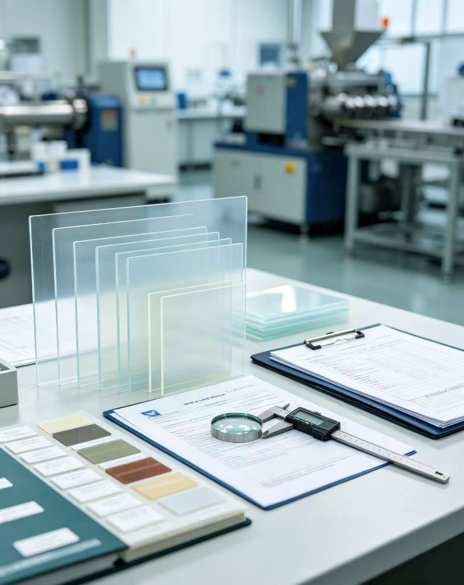
It’s super important to equip the high-precision sheet extrusion production line with a gear pump and find a reliable engineering partner. A qualified supplier for the plastic sheet extrusion production line offers way more than just the equipment itself:
They’ll come up with a parameter plan that perfectly matches your target resin, sheet thickness range, and hourly production capacity, instead of just recommending a generic pump model.
Their tech team will reserve installation space for the pump, cooling circuit, and pressure monitoring module during the factory layout planning stage.
The full after-sales service includes pre-start preheating of the pump, speed matching calibration, and a regular wear inspection checklist.
You should avoid suppliers who only offer basic plastic sheet extruders but don’t provide pump configuration consultation. An imperfect matching plan will lead to extra workshop renovations and repeated process debugging after the equipment is delivered.
Can the gear pump adapt to various sheet thickness specifications on the same extrusion production line?
Yeah, as long as the pump’s flow adjustment range covers the minimum and maximum hourly output you need. A closed-loop speed linkage system with a traction discharge device can automatically adjust the melt delivery volume to meet different specifications.
What are the common faults when the gear pump doesn’t match?
Typical problems include continuous thickness ripples, frequent pump overload alarms, accelerated screw wear, and an increased scrap rate of finished products. Most of these problems stem from uncalibrated flow displacement or mismatched pressure levels. If you want a fully customized matching plan for your production line, WYLONG can provide integrated pump and extruder configuration services for various sheet extrusion projects.
Is it necessary to use a gear pump for producing thin optical-grade plastic sheets?
It’s almost a must. The thickness tolerance of optical-grade sheets needs to be within ±0.01mm, and a standard extruder can’t maintain a stable melt pressure without an auxiliary metering pump.
This article systematically explains the complete logic of gear pump matching in precision sheet production, covering the stability principle of the melt pump, standardized selection criteria, on-site configuration optimization, and supplier selection methods. It fully shows how to optimize the thickness stability of the plastic sheet extruder by reasonably choosing the gear pump.
Whether your workshop is a small laboratory-scale plastic sheet production line or a large continuous plastic sheet extrusion factory, a scientifically matched gear pump is the most cost-effective upgrade option to control sheet thickness errors, reduce cutting production losses, and lower long-term equipment maintenance costs. All matching criteria take into account resin characteristics, target product accuracy, and factory layout, and are suitable for single-layer, multi-layer co-extrusion, and thermoforming-grade sheet manufacturing scenarios. Professional suppliers can flexibly adjust the pump specifications, pipeline layout, and linkage logic according to your workshop scale, raw material type, and target thickness tolerance, effectively avoiding parameter mismatches and after-sales modification costs.
If you’re about to purchase or upgrade your existing plastic sheet extrusion production line, contact WYLONG‘s professional tech team. Our engineers will accurately calculate the gear pump matching parameters based on your sheet size, operating speed, and resin formula, and provide a full set of customized equipment configuration and layout drawings to fully meet all your needs for precision sheet production.

Our professional team of technical experts provides services for your needs around the clock time.

 Optimized by Seraphinite Accelerator