×
×



In modern today’s plastic processing plants, thermoforming machines are the most commonly used main equipment for producing all kinds of plastic packaging, sheets, and transparent casings. A lot of factories use the same thermoforming equipment and alternate between producing PVC rigid sheets and PET transparent sheets.
However, most operators overlook a crucial issue: when PVC and PET are heated and formed, the exhaust gases they produce have completely different properties.
If the exhaust gas purification equipment is not properly selected or reasonably matched, it won’t just lead to non – compliance with exhaust gas emission standards and environmental problems. It’ll also gradually corrode the internal structure of the thermoforming equipment and shorten its service life. In severe cases, it may even cause production safety risks like acidic gas leakage and pipeline blockage.
This article will clearly explain the characteristics of the exhaust gases produced by these two materials, the standard treatment processes, the equipment matching logic, and the complete configuration methods. It also shares practical matching techniques for exhaust gas treatment in thermoforming workshops to help factories choose suitable exhaust gas treatment solutions.
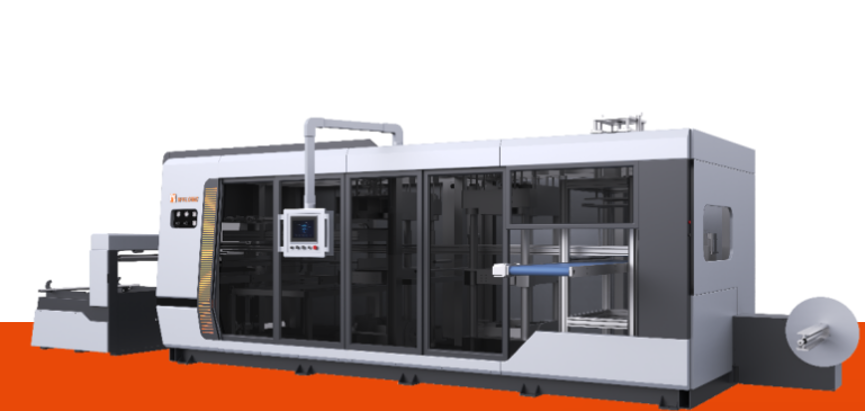
The exhaust gas recovery and treatment methods for these two materials can’t be used interchangeably because their chemical structures are completely different.
PVC is a chlorine – containing polymer material, while PET is a polyester material. Due to the significant differences in their material properties, during the heating and thermoforming processes, the pollutant emissions, the degree of harm, and the treatment difficulty are also completely different.
| Material | Forming Temperature Range | Core Pollutants | Key Hazards |
| Rigid PVC | 140–170℃ | HCl hydrogen chloride, phthalate plasticizer vapor, benzene series, plastic dust | Strong corrosivity, acid gas corrodes metal pipes and equipment; high odor, easy to form secondary pollution |
| PET Sheet | 120–160℃ | Acetaldehyde, polyester oligomer sticky oil mist, low-concentration VOCs | High viscosity condensate easily blocks pipeline and filter; slight odor, no corrosive acid gas |
According to the processing rules of the plastics industry, PVC is extremely sensitive to temperature. Once the heating temperature exceeds the safe forming range, the material will decompose and release colorless, highly corrosive hydrogen chloride gas.
When factories continuously use thermoforming machines to produce PVC products, the exhaust gas contains various components. It not only includes acidic gases but also mixes with plastic dust and oily substances generated from the volatilization of processing aids.
If this exhaust gas directly enters the purification equipment without neutralization treatment, within just a few months, the pipes, the metal shells of the purification equipment, and even the molds of the thermoforming machines will be severely corroded. This will directly lead to frequent equipment failures, increased maintenance costs, and significantly higher parts replacement fees.
Different from PVC, PET doesn’t produce corrosive acidic gases during the heating and forming process. However, when the material is processed at high temperatures, its low – molecular polyester components will volatilize and form a very sticky oil mist. This oil mist will continuously accumulate on the inner wall of the exhaust pipe over time.
If there’s no pre – treatment for a long time, the oil mist will become thicker and thicker, and eventually block the pipes, causing a significant decline in the exhaust effect of the entire plastic thermoforming machine.
Many small factories produce PVC and PET sheets alternately. This mixed production method is the most reliable.
Enclosed air collection
Install enclosed air collection hoods above the heating area and the forming station of the thermoforming machine. Reserve 15% of the air volume as a buffer space to prevent the exhaust gas from overflowing or diffusing and being discharged disorderly.
Pre – treatment
First, use a cooling tower to cool the high – temperature exhaust gas to below 45°C.
Then, neutralize the acidic harmful gases generated by PVC through a two – stage alkaline washing equipment.
Finally, use a dry filter to intercept the sticky oil mist and plastic dust generated by PET.
Core deep purification
This process combines activated carbon adsorption and catalytic combustion technology, which can effectively decompose volatile organic compounds, aldehydes, and other pollutants. The overall purification efficiency can exceed 98%.
Terminal meets emission standards
The terminal is equipped with a deodorization facility and a 15 – meter – long exhaust pipe. In addition, an online monitoring device for volatile organic compounds (VOCs) is installed to ensure that the exhaust gas emissions fully meet the local environmental protection standards.
If a factory only produces one type of material, a simpler method can be adopted to reduce operating costs while ensuring compliance:
When choosing waste gas purification equipment for thermoforming machines, the core principle is pretty simple: precisely match the air flow, temperature resistance, and anti – corrosion level according to the machine’s specifications and production rhythm. Don’t just use a single device randomly.
The air volume required by the purification equipment totally depends on the workbench size of the thermoforming machine. Different models have different standards:
Based on our years of on – site debugging experience, we’ve summarized several key matching points. They’re highly adaptable and have a low error rate:
In the mixed production workshop, anti – corrosion measures should be prioritized. For production lines that alternately produce PVC and PET, all pipes in contact with waste gas should use galvanized pipes or PP plastic pipes to prevent corrosion from acidic gases and avoid frequent damage.
Leave some margin for temperature adjustment
When the thermoforming machine changes production batches or switches between different plate types, the heating temperature will fluctuate. The front – end cooling pre – treatment equipment must be able to withstand a temperature difference of 120℃ to 200℃ to ensure a stable cooling effect.
For systems shared by multiple devices, the air flow must be controlled separately.
If multiple thermoforming machines share one purification system, each machine needs to be equipped with an air flow control valve to prevent some machines from over – exhausting while others under – exhaust, which could lead to uneven waste gas collection.
Arrange the equipment for easy later maintenance.
The filter cartridge box and activated carbon adsorption box of the purification equipment should be installed on one side of the thermoforming machine, leaving enough operating space so that workers can regularly replace the filter cotton and activated carbon without disassembling the machine or moving the equipment.
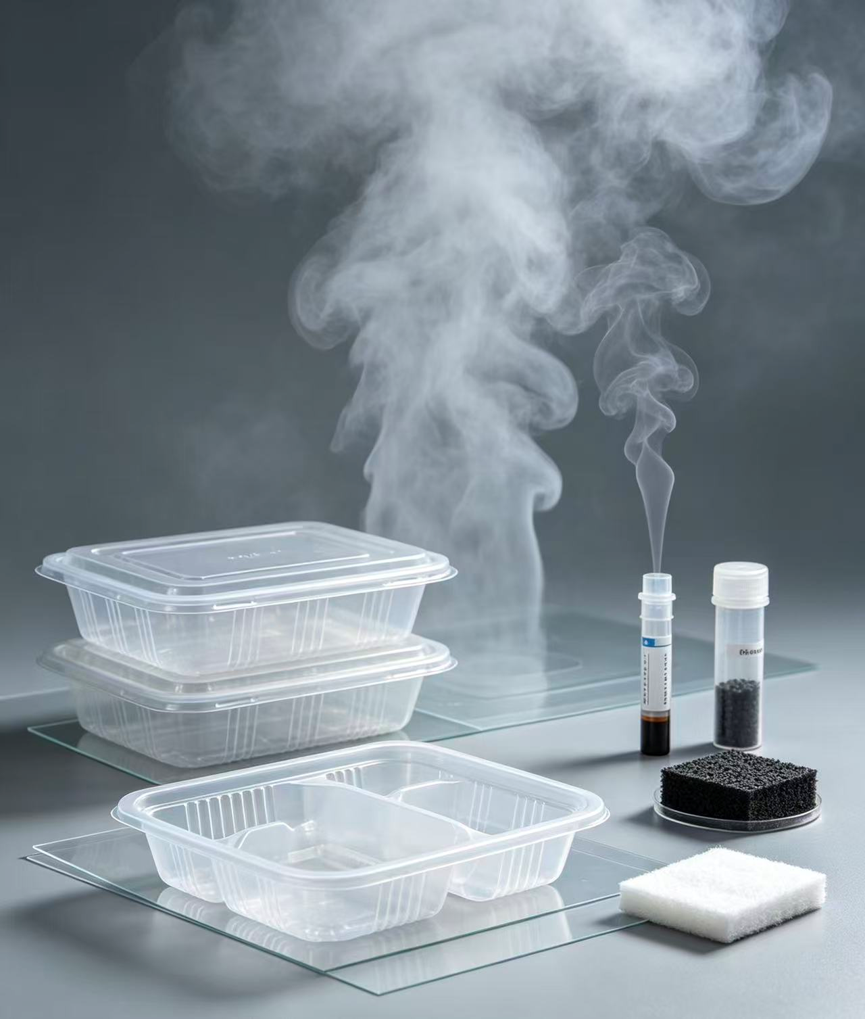
This complete guide for waste gas purification of thermoforming equipment divides the whole set of auxiliary equipment into four core modules and clearly stipulates the strict configuration standards for the PVC and PET co – production workshop:
Air collection module (required for all models)
It includes a sealed and high – temperature – resistant exhaust hood, a variable – frequency exhaust fan, a PP anti – corrosion air duct, and an air volume control valve. Its function is to comprehensively collect all the waste gas generated during the forming process, prevent odors from spreading in the workshop, and avoid waste gas leakage.
Pre – treatment module
It includes a closed – circuit cooling tower, a two – stage alkaline washing tower, a multi – layer dry filter, and an electrostatic oil mist removal device.
When producing PVC and PET, the full set of equipment must be equipped. When only producing PET, the alkaline washing tower can be omitted to reduce equipment investment and operation and maintenance costs.
Deep purification module
This module consists of an activated carbon adsorption box, a catalytic combustion device, and a thermal energy recovery system.
For medium – and large – scale production lines, it’s recommended to be equipped with an online desorption function, which can regenerate the activated carbon repeatedly and significantly reduce the cost of frequent replacement of activated carbon.
Safety monitoring module (must be installed in environmentally sensitive regulatory areas)
It includes temperature and pressure sensors, an explosion – proof pressure – relief device, a VOC online monitoring device, and a standard exhaust chimney.
It’s suitable for factories located in areas under strict environmental supervision.
Can a set of waste gas purification equipment handle the waste gas generated during the production of both PVC and PET simultaneously?
Yeah, it can be shared. But the prerequisite is that a multi – stage combined purification process must be adopted, which can handle the waste gas produced by the mixture of the two materials. If you only use a simple single – layer activated carbon adsorption device, the acidic gas produced by PVC will quickly corrode the carbon box of the equipment, and it won’t be able to effectively remove hydrogen chloride. Eventually, the waste gas emissions will exceed the standard.
How often should the filter elements and fillers of the purification equipment be replaced?
If it’s a production line that produces both PVC and PET, the dry filter cotton needs to be replaced every 15 days, the lye in the caustic scrubber needs to be replaced every 30 days, and the activated carbon needs to be replaced every 3 to 6 months depending on the daily output. If you only produce PET materials and there’s no problem of acidic waste gas corrosion, the replacement cycle of all consumables can be directly extended by half, so you can save more maintenance costs.
Can the economical small – scale thermoforming machines purchased by small factories be used in combination with simple small – scale purification equipment?
If you only produce PET products, a small integrated activated carbon equipment can meet the demand. But if it involves PVC sheet processing, even a small thermoforming machine must be equipped with caustic washing and neutralization devices. Otherwise, the equipment will be corroded by acidic waste gas, and if the emissions exceed the standard, you may face environmental pollution penalties.
Which brand has a more mature thermoforming equipment and waste gas purification solution?
WYLONG can provide a full – set waste gas purification design service for plastic thermoforming equipment. According to different material types and production conditions, it can precisely match the air volume and equipment parameters, helping factories significantly reduce operation and maintenance costs in the long run.
This article comprehensively summarizes the characteristics of waste gas during the thermoforming molding of PVC and PET materials, standard treatment technologies, equipment matching rules, and complete configuration requirements.
Choosing the right waste gas treatment solution can not only make the factory’s waste gas stably meet the standard and pass the environmental protection inspection smoothly, but also effectively protect the core components of the thermoforming machine, reduce equipment corrosion, failures, and replacement costs, and ensure the long – term stable and continuous operation of the entire production line.
The core of the whole matching logic lies in distinguishing the pollution differences between PVC and PET. The matching criteria are based on three aspects: air flow, equipment corrosion resistance, and waste gas pre – treatment effect.
WYLONG‘s supporting solutions are highly compatible. Whether it’s a small – scale trial production or a large – scale PVC and PET mixed production line, it can be precisely adapted. If you’re planning to buy a new thermoforming machine or want to upgrade your existing exhaust purification system, you can contact our professional technical team at any time. We’ll customize a unique and cost – effective exhaust purification solution for you according to your production scale and the types of materials you process.

Our professional team of technical experts provides services for your needs around the clock time.

 Optimized by Seraphinite Accelerator