×
×



Disposable medical blister packs are mainly used to encapsulate sterile surgical instruments, medicines, medical dressings, and various diagnostic consumables. They’re super important protective packaging in the medical industry.
Unlike blister packs for regular consumer goods, the production of medical device packaging has to follow really strict standards. It must meet the GMP clean production specifications, and all the data in the whole production process need to be traceable. Also, the sealing and barrier properties of the packaging have to be stable and reliable.
A lot of medical device manufacturers only focus on the equipment price and production capacity when they’re buying automatic plastic thermoforming machines. They ignore the planning of supporting configurations. So, there are often problems like the packaging seal not meeting the standards, the machine breaking down a lot because of raw material issues, and failing environmental protection and drug regulatory inspections.
If the equipment is properly configured, it can reliably meet the high – standard requirements of medical blister production. On the other hand, if the configuration is unreasonable, it’ll cause the equipment to stop working frequently, there’ll be a risk of product contamination, and it’ll increase extra production costs.
This article will clearly explain the suitable materials, hygiene standards, and the overall configuration logic of the whole production line in medical thermoforming production. It’ll guide you on how to correctly configure professional thermoforming equipment for medical blister packs. At the same time, it’ll share practical debugging tips to help manufacturers set up a compliant, stable, and standardized production line at once.
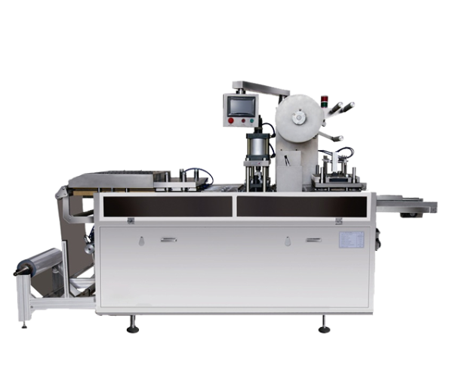
When making medical packaging, there are two strict standards for thermoforming machines, and you can’t compromise on any part:
First, the equipment has to be compatible with medical – specific forming films.
Second, the overall structural design of the equipment must meet GMP hygiene standards.
These two points are the fundamental prerequisites for ensuring the stable and compliant production of medical blister packs.
Whether the equipment can be directly compatible with the production raw materials directly affects the pass rate of the final product. Before customizing and purchasing the equipment, manufacturers must confirm the material – compatible processing range of the automatic plastic thermoforming machine.
| Medical Blister Material | Core Performance | Matching Machine Heating Parameter | Applicable Medical Products |
| Medical-grade PVC 250–300μm | Transparent, moderate moisture barrier, low cost | 110–120℃ flat heating plate | Stable tablets, common disposable medical tools |
| PVC/PVDC composite film | Ultra-low water vapor permeability, anti-hygroscopic | 115–130℃ constant temperature heating | Effervescent tablets, moisture-sensitive capsules |
| Medical PET/PP film | High-temperature resistance, eco-friendly recyclable | 125–140℃ segmented heating | Disposable surgical kits, injection accessories |
| Medical aluminum lidding foil | Light & oxygen isolation, tamper-evident seal | 180–220℃ sealing jaw temperature | All pharmaceutical unit-dose blister packs |
All the parts of the machine that come into contact with materials gotta be able to be quickly disassembled to avoid leftover plastic fragments contaminating sterile medical devices. Regular commercial-grade thermoforming plastic machines can’t do this.
Medical clean rooms have stricter structural standards for thermoforming equipment than food packaging production lines: 1. All product-contact surfaces are made of 316L stainless steel, which is seamlessly polished without any dead corners to prevent bacteria from staying. 2. There’s a closed dust-proof heating cover and a fully enclosed feeding channel, and it’s equipped with an external exhaust purification pipe to effectively isolate plastic volatile gases. 3. The PLC touch screen meets the standards of 21 CFR Part 11 and can automatically record heating temperature, sealing pressure, and production batch data, making the whole process traceable. 4. The mold structure can be quickly disassembled, and it’s designed without dead corners, making it easy for daily alcohol disinfection and in-depth cleaning between batches.
The production of disposable medical dressings depends on the integrated and synchronous operation of multiple workstations. We’ll configure it into basic standard settings and optimized high-end solutions according to different production scales.
This is the standard fully automatic thermoforming equipment configuration for disposable medical blister production, suitable for medium-sized pharmaceutical and medical device factories, covering all necessary functional workstations:
Dual-station film winding system: It can load the forming base film and aluminum foil sealing film at the same time, and prevent film deviation through servo tension control.
Segmented constant-temperature heating station: The left and right heating zones have independent temperature control to ensure the uniform softening of medical composite films.
Precision vacuum forming workstation: It can replace medical-grade molds, and the forming depth is adjustable, ranging from 2 mm to 15 mm, suitable for the cavities of surgical instruments and tablets.
Visual inspection module: It can automatically identify voids, incomplete forming, and foreign object contamination, and unqualified products will be automatically removed without manual sorting.
Heat-sealing and inkjet coding station: It can print batch numbers, expiration dates, and production codes in real-time to meet the medical traceability requirements. 6. Stamping and waste recycling station: It can automatically separate the formed blisters and residual films, and it’s equipped with a closed waste collection box to prevent plastic debris from entering the clean area.
For large-scale pharmaceutical production factories with an annual output of more than tens of millions of blister packages, enterprises should adopt the optimal combination of plastic thermoforming equipment on the basis of the standard configuration and add efficient auxiliary modules:
After determining the overall layout of the production line, it’s actually the various detailed configurations that decide whether the equipment can run stably in the long term. Below, we’ve put together a complete set of configuration plans and optimization techniques, which are especially suitable for the production of medical blister packaging.
Due to the particularity of medical blister production, the following three core configuration principles are summarized, which can be directly referred to during the factory procurement and commissioning process:
Prioritize the convenience of cleaning and maintenance
All detachable parts in the forming area should be designed within one meter reachable by workers. If the maintenance space is too narrow, daily disinfection and cleaning can’t be carried out smoothly, and it’ll be difficult to pass the inspection of the clean workshop.
Choose the equipment structure according to the size of the workshop
If your clean workshop space is relatively limited, it’s recommended to choose a servo-driven compact model and equip it with a short conveyor belt. This can effectively reduce the overall floor area and is suitable for the layout of small workshops.
Reserve space in advance for future upgrades
During the equipment customization stage, the manufacturer should pre-set the pipeline interfaces for chillers, waste gas purification, and dust removal equipment. In this way, when installing auxiliary equipment later, there’s no need to drill holes or modify pipes, thus saving time and cost.
These detailed configurations are designed specifically to solve the most common problems in medical production:
Install heat – insulating baffles in the high – temperature heating area of the equipment to prevent heat from dissipating too quickly and avoid the workshop temperature exceeding the 26°C standard of the clean room.
Install an independent dust cover at the film feeding position to prevent fine dust in the air from falling on the film surface and ensure the cleanliness of the packaging.
The whole machine is equipped with explosion – proof electrical components, fully meeting the fire safety standards of medical clean workshops. The optional quick – change mold structure enables the mold replacement process, which originally took 2 hours, to be completed in just 30 minutes now. This facilitates the rotation production of various medical devices and the needs of small – batch production.
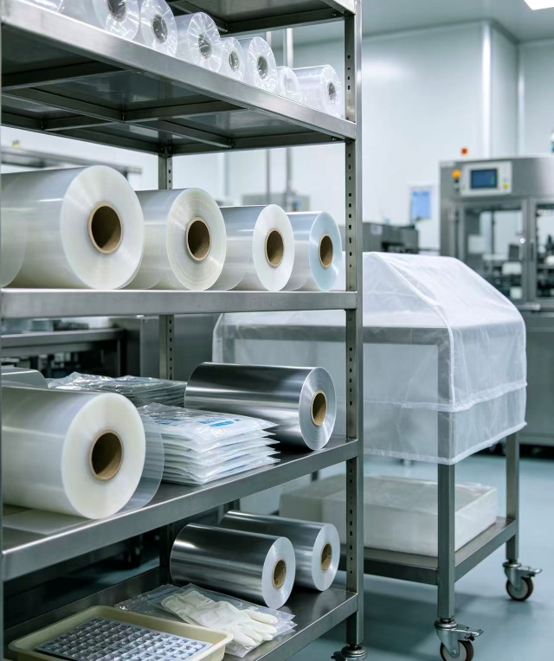
Whether a set of equipment can produce qualified medical device packaging depends not only on the equipment itself but also on the manufacturer’s customization ability and supporting services. Therefore, choosing a professional and reliable manufacturer is the key to setting up a factory.
A reliable automatic plastic thermoforming machine manufacturer will provide full – process pre – sales and after – sales service technical support:
First, the technical team can design the equipment layout according to the clean workshop drawings you provide and accurately reserve operation, maintenance, and fire – fighting channels.
Second, they can flexibly adjust the lengths of the feeding and discharging conveyor belts according to the factory scale and site shape to adapt to various irregular production workshops.
Third, when the equipment is delivered, they’ll provide a full set of quality inspection and verification documents to directly assist the factory in passing the GMP review and drug regulatory certification.
Don’t choose small manufacturers that only sell bare machines and lack supporting solutions. If the parameter matching is inaccurate and the configuration is not professional, even if the machine is expensive, it can’t meet the production standards of medical packaging.
Can one piece of equipment produce both tablet blister packaging and surgical instrument blister packaging at the same time?
Absolutely, as long as the equipment has a built – in quick – change mold structure. Before purchasing, make sure to confirm the forming stroke and heating temperature range of the equipment to ensure it can handle thin medical film materials and thicker medical hard films.
What materials can the official manufacturer provide to meet the required review requirements?
Regular brands can provide 316L stainless steel material certificates, CE certifications for electrical products, and complete equipment parameter traceability records. If you need one – stop layout planning and review support services, WYLONG can customize exclusive medical injection molding production line configuration plans for medical manufacturers.
Does the medical thermoforming equipment need to handle exhaust gas separately?
Yeah. When the medical plastic film is heated at high temperatures, it’ll produce trace amounts of volatile substances. So, the equipment gotta reserve an exhaust interface and be equipped with an independent exhaust gas purification device to meet the environmental protection requirements of the clean workshop.
This article systematically explains the complete configuration logic of the medical blister thermoforming production line, including raw material compatibility requirements, cleanliness and hygiene standards, overall machine configuration specifications, as well as on – site actual optimization and debugging plans. It gives a comprehensive overview of the overall configuration process of the fully automatic plastic thermoforming equipment dedicated to medical blister packaging.
Whether it’s small – scale production of medical devices in the lab or large – scale independent production of pharmaceuticals with blister packaging in a pharmaceutical factory, as long as the equipment configuration is standardized, it can effectively reduce the risk of product contamination, increase the qualified product rate, and significantly cut down the later equipment operation and maintenance costs.
All our configuration designs revolve around three core aspects: meeting the requirements of medical clean workshops, ensuring stable packaging barrier performance, and supporting flexible production switching for multiple products. The solutions are comprehensive, covering various needs from basic standard equipment to high – end intelligent integrated production lines. Professional equipment manufacturers can flexibly adjust the equipment layout and parameters according to your workshop scale, product type, and production capacity requirements, fundamentally avoiding problems like repeated workshop renovations, mismatched equipment parameters, and sub – standard production quality.
If you’re planning to build a new medical blister production line or upgrade your existing plastic thermoforming equipment, feel free to contact the WYLONG technical team. Our engineers will customize equipment configurations and workshop layout plans according to your medical device specifications and clean – room drawings to ensure they fully meet your actual production needs.

Our professional team of technical experts provides services for your needs around the clock time.

 Optimized by Seraphinite Accelerator