×
×



Plastic packaging factories face a common financial crossroad as order volumes expand: continue pouring funds into aging single-station equipment, or allocate capital to switch to a more productive multi station thermoforming machine. Many plant managers only compare upfront sticker prices when weighing upgrades, ignoring long-term labor, scrap and downtime losses that erode annual profit margins. This article delivers a full cost-benefit breakdown to answer the core question: is it worth upgrading to multi station thermoforming machine for packaging production.
We will contrast two mainstream forms of thermoforming equipment, unpack all direct and hidden upgrade expenses, analyze return cycles, and share procurement standards for anyone browsing a thermoforming machine for sale. All calculations and comparisons reference real-world production data from packaging factories, helping you make data-driven capital investment decisions instead of subjective guesswork.
A single station thermoformer completes heating, forming, cooling and trimming sequentially on one fixed platform, representing entry-level plastic thermoforming machine widely adopted by small workshops with sporadic low-volume orders.
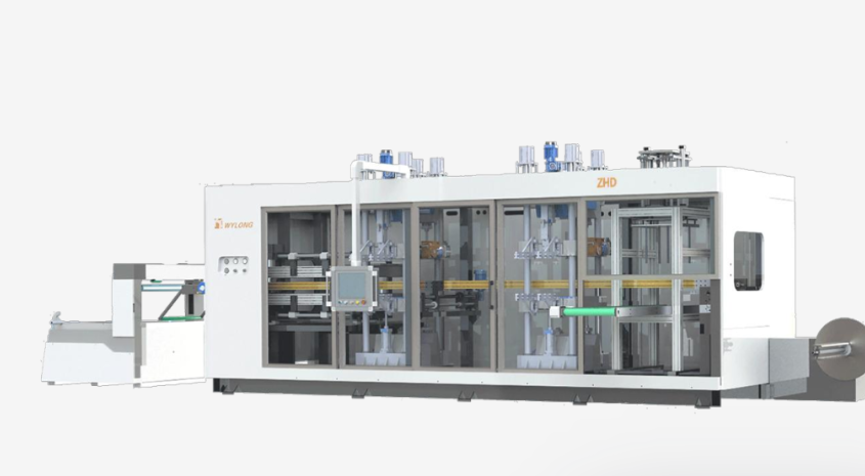
The core innovation of a multi station thermoforming machine lies in parallel cross-station operation: while one station heats plastic sheets, another finishes forming and cooling simultaneously, eliminating equipment idle time entirely. Its standout strengths include:
30%–60% higher hourly output than single station models under identical forming area
Independent multi-zone temperature control, cutting product scrap rate from 8% to under 3%
Semi-automatic sheet feeding and unloading, reducing required operators by half
Modular station structure supporting flexible switching between food trays, electronic blisters and other packaging styles
The table below shows intuitive multi station thermoforming machine price comparison with single station type, covering mainstream semi-automatic models on the market:
| Equipment Type | Base Thermoforming Machine Price | Core Configuration Difference |
| Single station thermoformer | Medium-low capital cost; basic single heating zone, manual clamping | Suitable for startup small-batch production |
| Multi station thermoforming mahine | 40%–80% higher initial purchase price; multi-station linkage, servo vacuum system, automatic feeding | Built for continuous two-shift mass packaging production |
Direct capital expenditure forms the core of cost of upgrading single station to multi station thermoforming machine, covering clear line-item costs:
New equipment purchase payment to a qualified multi station thermoforming machine manufacturer
Disassembly, removal and waste disposal fees for old single station machines
Workshop reconstruction: power circuit expansion, foundation reinforcement, conveyor installation
Initial spare parts inventory, including heating tubes, vacuum gaskets and clamping strips
Many procurement teams overlook these recurring hidden expenses that raise total investment:
Multiple variables shift the total outlay when replacing old equipment with a multi-station model, the key factors affecting cost to replace old thermoformer with multi station model are sorted as follows:
Production scale: Larger forming width and more stations push base machine prices upward
Automation grade: Fully automatic roll-fed multi-station units cost far more than semi-automatic sheet-fed versions
Workshop conditions: Small workshops require higher renovation costs to fit oversized multi-station frames
Customization demands: OEM private control panels, food-grade anti-corrosion structures add extra manufacturing fees
After-sales service package: Long-term maintenance contracts and on-site installation support increase overall expenditure
Calculating return on investment for multi station thermoforming equipment upgrade relies on three core annual savings indicators:
Labor cost reduction: Cut 1–2 full-time operators per production line, saving tens of thousands of labor expenses yearly
Material waste savings: Lower scrap rate reduces raw plastic sheet consumption by 5%–12% annually
Order revenue growth: Higher daily output accepts more bulk customer orders, lifting total annual sales volume

Beyond pure financial savings, switching to multi-station hardware brings long-term competitive advantages for thermoforming packaging manufacturers:
When screening listed thermoforming machine for sale, focus on targeted criteria aligned with your packaging output:
Match station quantity to daily order volume: 2–3 stations for medium batches, 4+ stations for large-scale continuous production
Confirm heating system precision: Prioritize independent multi-zone IR heating to stabilize packaging surface forming
Verify vacuum linkage performance: Synchronized dual-station vacuum prevents uneven blister wall thickness
Evaluate post-sales support: Choose suppliers providing on-site commissioning and long-term spare parts supply
For aging single station equipment, two paths exist: repeated maintenance or full replacement.
Continuous repair of outdated hardware creates cumulative hidden costs that often surpass the price gap of a new multi-station unit within three years.
Will multi station thermoforming machines raise monthly electricity bills significantly?
Power consumption per unit product actually declines, as continuous heating eliminates repeated heat loss from frequent startup and shutdown of single station heaters.
Is small-batch packaging production unsuitable for multi-station equipment upgrades?
If your monthly output fluctuates drastically below 40,000 units, extending the service life of single station thermoformers via maintenance is more cost-effective.
Does brand difference influence the total upgrade cycle cost?
Yes. Brands with mature integrated design such as WYLONG optimize power consumption and reduce post-purchase maintenance frequency, lowering long-term total ownership cost.
Can old molds from single station machines be reused on new multi station equipment?
Most standard blister molds are compatible; only ultra-large special molds need slight frame modification before installation.
The decision to upgrade from single station hardware to a multi station thermoforming machine is never a simple comparison of machine price tags, but a comprehensive assessment of total lifecycle cost and production revenue growth. This guide covers the structural differences between two types of thermoformer, full breakdown of direct and hidden upgrade expenditure, key variables shifting replacement budgets, and clear standards to calculate return on investment for multi station thermoforming equipment upgrade. We also analyzed the long-term commercial value of the upgrade for thermoforming packaging lines, plus a clear judgment framework to choose between repairing old equipment or purchasing new thermoforming machine for sale.
For factories with stable medium-to-high volume packaging orders, the cost savings in labor, raw materials and order expansion fully answer the core question is it worth upgrading to multi station thermoforming machine for packaging production, with most manufacturers recovering upgrade costs within 18 months. WYLONG supplies standardized and customized multi-station thermoforming equipment tailored to food, cosmetic and electronic packaging lines, with complete cost accounting support for factory upgrade projects. If you are planning to replace aging single station plastic thermoforming machines and need accurate cost-benefit evaluation or equipment quotation, reach out to their professional engineering team for exclusive upgrade solutions matching your production scale and budget.

Our professional team of technical experts provides services for your needs around the clock time.

 Optimized by Seraphinite Accelerator