×
×



Every stable plastic production line relies on matching core auxiliary equipment to main processing units, and vacuum pumps stand as the most overlooked yet decisive component for shaping plastic sheets. A mismatched pump leads to slow mold suction, uneven material forming, bubbled blanks and extended production cycles, even if operators invest in high-end Thermoforming Machine. Different production scales, mold depths and forming techniques demand distinct vacuum flow, ultimate pressure and tank capacity, which creates a clear standard for how to select vacuum pump for various thermoforming machines. This guide sorts mainstream thermoforming equipment categories, analyzes pump performance indicators, shares targeted pump collocation schemes for small and commercial units, and summarizes actionable vacuum pump matching tips for different thermoforming equipment, helping manufacturers fully optimize thermoforming process via reasonable vacuum pump configuration.
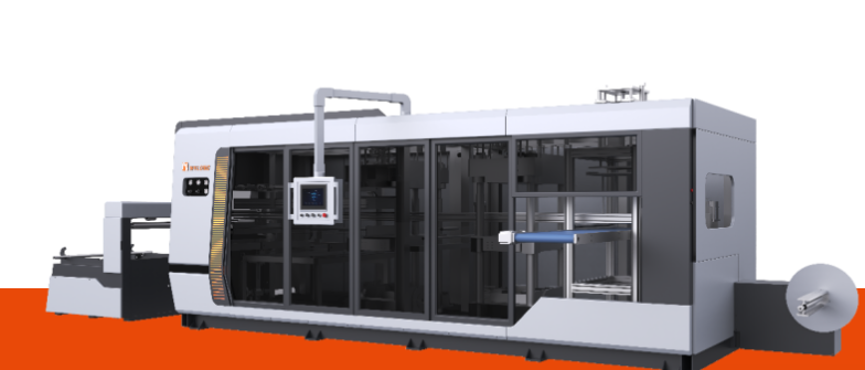
Manufacturers classify mainstream thermoforming equipment by production volume, automation degree and forming area, with three core categories covering most industrial scenarios:
Bench-top small plastic thermoforming machine: Manual clamping, compact forming bed below 600×600mm, low hourly output, mainly used for prototype development, small-batch custom packaging and laboratory testing
Semi-automatic commercial thermoformer: Pneumatic sheet fixing, single-station heating and forming, forming area 600×600mm–1200×1200mm, suitable for medium-volume blister, cosmetic tray and automotive interior trim mass production
Fully automatic inline thermoforming machine: Multi-station continuous operation, automated feeding, heating, forming and trimming, ultra-large forming beds for large hollow parts, twin-sheet and pressure forming heavy-duty production
All pumps supporting the plastic thermoforming process must balance stable continuous pumping speed and accessible maintenance. Three mainstream pump types dominate factory collocation, with core attributes sorted below:
Before confirming hardware collocation, follow four core selection benchmarks to avoid overinvestment or insufficient suction capacity:
Match pumping speed to mold cavity volume: Deep-draw large molds require 30% higher flow rate than shallow trays, plus a safety factor for pipeline pressure loss
Align ultimate vacuum with sheet thickness: Thin gauge sheets need medium vacuum; heavy gauge, twin-sheet and pressure forming demand deep vacuum two-stage pumps
Calculate cycle frequency: High-speed automatic lines need vacuum buffer tanks to maintain stable pressure during continuous forming
Adapt pump medium to workshop environment: Food and medical production must adopt oil-free dry pumps to prevent finished product contamination
Compact bench-top plastic thermoforming machine features tiny mold cavities and discontinuous manual operation, eliminating the need for large buffer tanks. Standard collocation rules:
For mid-volume production, most factories select thermoforming machine for sale with semi-automatic single-station structure, requiring stable and sustained vacuum output. Standard collocation scheme:
Specialized forming crafts raise higher standards for vacuum stability, requiring customized pump combinations:
Twin-sheet thermoforming: Two sheets bonded to form hollow parts, dual independent vacuum pipelines with two parallel two-stage pumps to ensure synchronous suction on upper and lower molds
Pressure forming: Compressed air cooperates with vacuum to mold fine textures, deploy high-flow claw pumps plus large-capacity vacuum tanks to maintain constant negative pressure during air compression
Heavy-gauge deep draw thermoforming: Thick PC, polypropylene sheets need deep vacuum, match two-stage rotary vane pumps with increased tank volume to avoid vacuum attenuation during long mold suction
A well-matched vacuum system delivers three core production improvements that directly boost factory profit:
Shorten forming cycle: Sufficient pumping speed cuts mold suction time by 20–40%, lifting daily machine output
Reduce defective rate: Stable deep vacuum eliminates sheet wrinkling, air bubbles and incomplete mold fitting, lowering material waste
Cut long-term operation cost: Reasonable pump power avoids unnecessary energy consumption; oil-free pumps reduce regular maintenance expenses

These actionable standards simplify pump collocation decision-making for factory purchasers:
Reserve 20–50% flow safety margin according to pipeline length; long-distance layout needs higher pump capacity
Separate vacuum pipelines for multiple parallel thermoformers, avoid shared pumps causing pressure competition
Install filter and condensate traps at pump inlets to block plastic volatile gas and sheet debris, extending pump service life
Match tank volume to forming area: Larger forming beds require bigger buffer tanks to offset instantaneous air extraction demand
Many production defects stem from three typical collocation mistakes:
Can one shared vacuum pump supply multiple small thermoformers in a workshop?
It is feasible only if total mold cavity volume and cycle frequency are calculated to reserve sufficient flow margin. If each machine operates continuously, independent pumps are recommended. The WYLONG brand provides central vacuum system integrated collocation solutions for multi-machine production workshops.
Is a two-stage pump always better than a single-stage model for all thermoforming molding?
Not exactly. Single-stage pumps fully meet shallow tray and thin-sheet packaging demands; two-stage pumps are only necessary for heavy-gauge, twin-sheet and pressure forming requiring deep vacuum.
How to judge if the existing pump configuration of a thermoformer needs upgrading?
Observe two indicators: prolonged mold suction time over 10 seconds, and uneven surface textures with local bubbles on finished parts; both signals mean insufficient pumping speed or vacuum depth.
Does high altitude affect vacuum pump matching for thermoforming equipment?
Yes. Atmospheric pressure drops above 2000 feet elevation, so select pumps with 30% higher rated flow and increase vacuum tank volume to compensate for natural pressure loss.
Vacuum pump configuration acts as the invisible core determining the yield and finished quality of any Thermoforming Machine, with pump flow, ultimate vacuum and supporting tank size strictly calibrated to machine type, forming technique and production scale. Small manual bench-top units adopt compact integrated single pumps without extra tanks, while commercial semi-automatic production thermoformers require medium-flow rotary vane pumps matched with buffer tanks; special crafts such as twin-sheet and pressure forming further demand dual pump parallel two-stage systems to sustain stable negative pressure.
From calculating basic cavity volume to reserving safety flow margin and matching medium-compatible pump types, every collocation step follows the core principle of matching vacuum performance to actual production demand, which fundamentally realizes the goal to optimize thermoforming process via reasonable vacuum pump configuration. The WYLONG brand provides one-stop vacuum pump matching schemes for full-series thermoformers, covering prototype small units, commercial mass-production machines and special-process automatic inline equipment, with pre-calibrated pump parameters for different mold depths and sheet materials. If you face unstable forming quality, slow cycle speed or frequent pump failure on your production line, reach out to their professional technical team to customize exclusive vacuum pump configurations matching your thermoforming equipment and production targets.

Our professional team of technical experts provides services for your needs around the clock time.

 Optimized by Seraphinite Accelerator