×
×



Nowadays, there’s a huge increase in the demand for compostable and degradable packaging in the market. A lot of research teams are using raw materials like PLA, PBAT, and starch to come up with all sorts of biodegradable material formulas.
Before the plastic sheet extrusion production line starts large – scale production, you gotta do small – scale tests in the lab first. But a lot of researchers don’t have a fixed and standardized testing process. They keep trying over and over again but keep making mistakes. It not only wastes raw materials but also makes the test data unstable. So, they can’t accurately tell the actual production effect and product performance of the new materials.
This article has sorted out a complete and standardized trial production process for the lab degradation extruder formula. It covers everything from pre – test preparations, standard operating procedures, quality control techniques to data sorting after the test. It’s designed specifically for labs doing formula research with biodegradable extruders. The goal is to standardize the trial production process, reduce useless tests, and speed up the formula optimization and iteration.
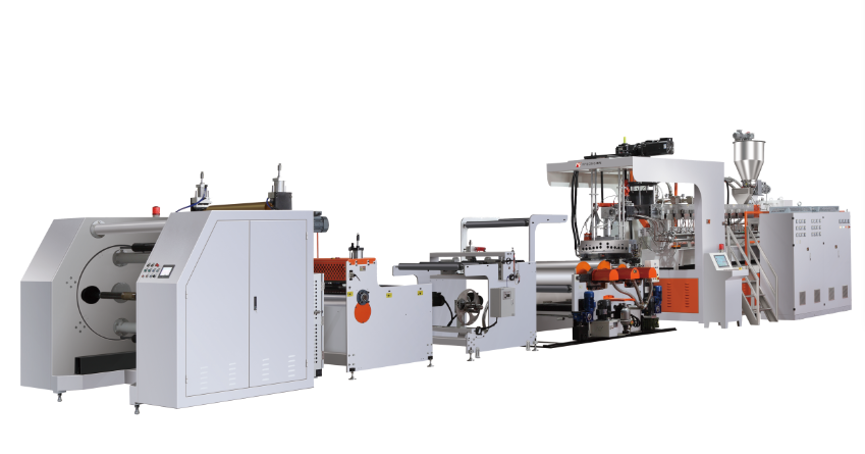
Biodegradable plastics are different from regular plastics. They absorb water and hydrolyze easily, and they have a very narrow temperature tolerance range. They’re super sensitive to processing temperature and holding time. If you don’t do enough prep work in the beginning, the experiment is likely to fail. So, you have to finish all the pre – treatment work before starting the equipment to avoid most production problems in advance.
The first step in formula testing is to make sure all the components are compatible.
If the compatibility between multiple resins and fillers is poor, when you produce plastic sheets through the extrusion process later, there could be serious defects like material delamination, bubbles in the sheets, and the finished products cracking easily.
Here are the most commonly used degradable material combinations in the market and their compatibility judgment criteria:
| Blend Combination | Compatibility Judgment Sign | Risk of Poor Compatibility |
| PLA + PBAT | Uniform transparent melt without stratification | Sheet cracking, low impact resistance |
| Starch + PLA/PBAT | No white granular agglomerates | Surface spots, uneven thickness |
| Biodegradable resin + inorganic filler | Smooth melt without powder precipitation | Frequent die blockages |
Before doing a formal and precise raw material mixing test, we can take a small amount of raw materials and mix them first. Just briefly check to see if there are any incompatibilities when the various components are mixed. If we find the materials are separating or forming layers, we gotta add the right compatibility additives. After optimizing the formula, we can do the formal test.
The ordinary plastic waste left in the equipment can contaminate the degradable melt, which’ll directly make the test data inaccurate and screw up the test results. So, the plastic extrusion equipment has to be cleaned and debugged according to this standard procedure:
After each test, empty all the remaining materials in the equipment completely. Use a special degradable cleaning agent to clean the material barrel continuously for 30 minutes at medium temperature.
Take out the core parts like the mold, screen, and screw mixing block, clean them thoroughly and wipe them dry to get rid of carbon deposits and leftover waste.
Choose the appropriate segmented temperature parameters according to the characteristics of the degradable material for this test. After heating, keep the temperature constant for 40 minutes to make sure the temperature inside the barrel is evenly stable.
Start the equipment in low – speed no – load mode. Check if the screw rotation, pressure sensing, and feeding system are stable and normal to rule out possible equipment malfunctions.
This section details the complete testing method for the formula of the biodegradable extruder. The whole process is divided into standardized steps to make sure the test results are as stable, comparable, and repeatable as possible each time.
All formula tests follow the single – factor principle. Only change one condition each time so we can accurately figure out the relationship between formula adjustment and extrusion effect.
Weigh all the raw materials accurately according to the basic formula. Pre – dry the degradable particles to keep the moisture content within 0.03% to avoid the impact of material moisture absorption and hydrolysis on the test results.
Mix the granular raw materials, fillers, and various additives well to make sure the material components are evenly distributed.
Start feeding at a low speed. After the equipment is running stably, continuously record key data like melt pressure, torque, and melt temperature in real – time.
Continuously extrude and collect the molten material strips. Check the appearance visually and record all abnormal situations, like color change, bubbling, and broken strips.
In each round of the experiment, only make small adjustments to one formula ratio or process parameter. This helps compare the data before and after and accurately determine the optimal parameters.
This series of standard procedures is the core basis for testing new material formulas. It’s suitable for developing sheet formulas for plastic sheet extruders in subsequent large – scale production:
First, use a mature and stable degradable basic formula for the test to set a reference standard for basic performance so we can compare and analyze new materials later.
In each batch of tests, only adjust the proportion of one raw material (filler, blending agent, or plasticizer), and keep all other process parameters the same.
Keep the feeding speed and screw speed under stable control to make sure the melt residence time is the same in each test and eliminate variable interferences.
After the equipment finishes the stable extrusion process, collect enough samples for subsequent tests on the mechanical properties and appearance quality of the material.
Archive the raw material batches, weighing data, and equipment process parameters uniformly to make sure all test data can be traced and audited.
Even if the production formula is strictly tested and produced according to standard procedures, quality issues may still occur if the process parameters aren’t properly matched. Here, I’ll divide the optimization methods into two categories: general quality control technology applicable to the whole production process, and special adjustment plans tailored for the film production line.
This control method is designed to solve common defects in the trial – production stage of degradable materials. It can effectively guarantee the extrusion quality and significantly reduce the test failure rate:
Keep the temperature of the entire barrel strictly below 200℃, and shorten the residence time of the melt in the barrel to less than 90 seconds to avoid long – term exposure of the material to high temperatures and prevent material degradation or yellowing. The equipment is equipped with a multi – stage vacuum exhaust system, which can quickly expel water vapor and small – molecule volatiles generated during the processing of the degradable melt, effectively preventing problems such as foam generation and high haze.
For biodegradable formulas containing starch, replace the low – shear screw components to avoid excessive shear force directly damaging the molecular chain of the material and prevent product performance degradation.
Reasonably adjust the feeding speed to keep the barrel filling rate stable between 60% and 70%, avoid material accumulation, and completely eliminate dead corners of material accumulation in the machine.
Many experimental formulas developed in the laboratory will eventually be used for large – scale plastic sheet extrusion production. Therefore, during the trial – run stage, it’s necessary to reserve space for parameter adjustment in advance to ensure smooth production later.
Conduct multi – gradient temperature tests to measure the melt flow rate and match the heating parameters of each area of the production line, so as to avoid large deviations between small – scale test data and production data.
Accurately record the melt viscosity data to provide an accurate basis for the calibration of the gear pump and the adjustment of the die gap of large – scale production equipment later.
Conduct early tests on the tensile properties of the melt to predict the stability of the stretching and wire – drawing processes and prevent problems such as cracking or breakage of the sheet during large – scale production.
Test the thermal shrinkage characteristics of the samples. Adjust the temperature of the cooling rolls of the production equipment in advance according to the shrinkage data to ensure the dimensional stability of the final product.
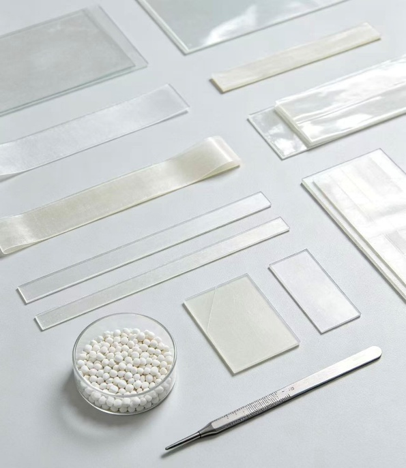
Completing the formula test doesn’t mean the process is over. Only after comprehensive sample testing and standardized data organization can we accurately evaluate the advantages and disadvantages of the formula.
Appearance inspection: Carefully record all appearance defects of the samples, including transparency, bubble distribution, black spot impurities, yellowing, and color change.
Physical property testing: Conduct unified tests on core indicators such as tensile strength, elongation at break, and melt flow rate for each batch of samples.
Degradation performance verification: For packaging materials with a degradable formula, conduct additional composting degradation tests to verify whether the materials meet the degradation standards.
Systematic data archiving: Integrate raw material information, equipment process parameters, and all test data into a comprehensive test report for subsequent formula iteration and comparative optimization.
Why do bubbles easily form in the degradable melt during tests on the lab extruder?
The main reasons are insufficient drying of the raw materials and poor vacuum degassing. You should re – dry the raw materials and increase the vacuum negative pressure to fix this issue.
Can the lab test parameters be directly applied to the large – scale plastic sheet extrusion production line?
Due to differences in the screw length – to – diameter ratio and shear rate of the production equipment, some parameters need adjustment. Lab data is just for reference, not fixed parameters. If you need a transition plan from the lab to production for the degradable sheet formula, WYLONG can provide consulting services on matching equipment and processes.
How to reduce the yellowing of degradable samples during testing?
Lower the barrel temperature, shorten the melt residence time, and add a small amount of heat stabilizer to the formula.
This article systematically reviews the complete process of testing biodegradable formulas based on the lab extruder, including checking material compatibility and equipment commissioning before the trial, standardized step – by – step trial runs, full – process quality control, and post – trial sample inspection. The article comprehensively interprets the operating guidelines for the trial run of degradable materials suitable for the sheet extrusion production line.
Whether you’re screening small – batch degradable sheet formulas in the lab or conducting pre – verification for large – scale production of new composite materials, following the standardized testing process can significantly reduce the consumption of ineffective materials and improve the accuracy of formula performance evaluation. All operations and optimization measures target the weak points of degradable polymers, such as easy hydrolysis and a narrow thermal window, to achieve seamless connection between lab test data and the large – scale production process of plastic sheet extruders. Standardized test management can shorten the formula iteration cycle by over 30% and effectively avoid quality problems such as sheet bubbling, cracking, and yellowing after large – scale production. Professional equipment suppliers can customize modular screw combinations, multi – stage vacuum structures, and supporting feeding systems according to the customer’s biodegradable formula to ensure consistent test data between lab equipment and full – scale production lines.
If you’re developing a new biodegradable sheet formula and need a biodegradable extruder at the lab or production line level, consult WYLONG‘s professional technical team. Our engineers will develop a customized trial – run plan based on your raw material composition, target sheet thickness, and daily output, and complete the layout design drawings of the entire sheet extrusion production line to fully meet your needs in the R & D and mass production of compostable packaging materials.
Previous: No Information
Next article: Small Factory Layout Planning: Space Requirement Calculation for Full Thermoforming Production Line

Our professional team of technical experts provides services for your needs around the clock time.

 Optimized by Seraphinite Accelerator