×


Traditional polymerization reaction equipment usually operates in a batch – production mode. It not only takes up a lot of factory space and has a long production cycle but also generates a large amount of solvent waste. It can no longer meet the needs of efficient and lean production in modern plastic factories.
Reactive extrusion technology is a continuous production process. It can complete all the processes like material melting, mixing, chemical reaction, and removal of low – molecular impurities in one go on a single piece of equipment. Currently, only twin – screw extruders can maturely achieve this integrated reaction production process.
However, many manufacturers, after purchasing twin – screw equipment, only use it for simple mixing and pelletizing and fail to fully master the professional operation logic of reactive extrusion. If the screw combination is improper, the temperature curve is unstable, or the feeding ratio is inaccurate, it’s very easy to lead to insufficient reaction, material degradation, and sub – standard finished product particles. As a result, they have to adjust the equipment repeatedly, causing a great waste of raw materials.
This article details how to use co – axial twin – screw equipment for reactive extrusion production, covering the equipment principle, standard process parameters, actual optimization techniques, and industry application scenarios. It helps manufacturers stabilize the production process at once, reducing the cost of trial – and – error and raw material waste.
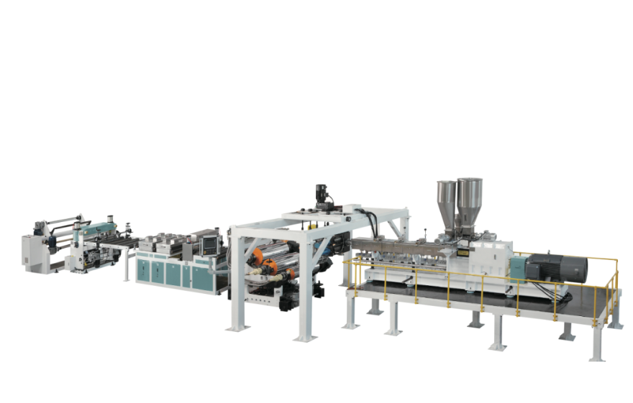
To achieve successful reactive extrusion production, you first gotta understand: What’s the difference between it and ordinary plastic extrusion, what are its advantages, and how does the equipment work.
Twin – screw equipment uses a modular screw structure, which can divide the barrel into independent conveying zones, melting zones, reaction zones, and exhaust zones. This is something single – screw equipment can’t do.
This combination effect is more powerful and uniform.
The two screws mesh with each other and operate in a self – cleaning mode. They can evenly disperse monomers, catalysts, and fillers, ensuring that each particle in the material has the same degree of reaction.
Controllable material residence time
By replacing different screw components, you can precisely control the residence time of materials in the barrel, thus achieving fast grafting reactions and slow polycondensation reactions.
Excellent exhaust and ventilation performance
The equipment is equipped with multi – stage vacuum exhaust ports, which can quickly expel the moisture, methanol, and various small – molecule by – products generated during production, significantly improving the purity of the finished product.
Wide range of compatible materials
The barrel lining is made of corrosion – resistant materials, which can be compatible with acidic catalysts, high – viscosity prepolymer materials, and highly filled modified raw materials. It’s suitable for most reaction and modification formulas.
That’s why twin – screw equipment can not only complete various reaction, modification, and pelletizing processes but also provide high – quality raw materials for subsequent plastic sheet extrusion and the entire sheet production line.
Ordinary extrusion only involves simple physical mixing and melting of materials, while reactive extrusion completes chemical reactions simultaneously during the melting process. The whole production process includes five consecutive steps:
Precise feeding
Dry matrix resin and solid additives are evenly and stably fed into the barrel through a loss – in – weight feeder.
Preheating and softening
In the low – shear conveying area, the materials are slowly heated and softened to ensure that unnecessary side reactions don’t occur prematurely.
Core chemical reaction
Through the staggered arrangement of mixing blocks, a stable shear force and temperature can be generated, enabling the materials to successfully complete various chemical reactions such as grafting, polymerization, and cross – linking.
Removing impurities through vacuum
Using multi – stage negative – pressure vacuum ports, all volatile small molecules and by – products generated during the reaction can be effectively extracted, ensuring the purity of the materials.
Unstable process parameters are the main reason for the low reaction conversion rate and fluctuating product quality in most factories. Here are the core and key parameters in twin-screw reactive extrusion production, presented in a clear and orderly way to make it easy for on-site technicians to directly refer to and use.
| Parameter Category | Adjustment Standard for Reactive Extrusion | Risk of Improper Setting |
| Barrel temperature | Feeding zone: 120–160℃; Reaction zone: 180–260℃; Vent zone: 160–200℃ | Overheating causes material carbonization; low temperature leads to incomplete reaction |
| Screw rotating speed | 200–600rpm (adjust by reaction residence demand) | Excess speed shortens reaction time; low speed brings over-shear degradation |
| Feeding weight ratio | Error controlled within ±0.5% via loss-in-weight feeders | Unbalanced monomer ratio sharply reduces grafting rate |
| Vacuum degree | Devolatilization port ≥ -0.09MPa | Residual small molecules cause bubble defects on downstream sheet products |
| Screw filling rate | Maintain 60%–75% in reaction section | Overfilling blocks vent ports; underfilling weakens mixing uniformity |
All the process parameters listed above are within the industry standard reference range. In actual production, you should adjust them according to your own raw material formula and product requirements. The whole set of parameter standards reflects the core process foundation of twin-screw extrusion production.
The reactive extrusion process has extremely strict operational requirements. Since the start-stop procedures haven’t been unified and standardized, it’s easy to damage the equipment and lead to the scrapping of an entire batch of materials. Everyone can directly adopt the following standard procedures:
Step-by-step preheating and heat preservation: Heat each temperature zone of the barrel separately. After reaching the set temperature, you must maintain it for 40 minutes to eliminate the temperature differences between regions and ensure uniform heating.
Low-speed no-load operation: Don’t input materials, so there’s no production load. Start the main engine at a low speed to check if the screw runs smoothly and if there are any leakage issues at the barrel seal.
Gradually add materials: First, add pure base resin alone and run it for 10 minutes to clean the inner wall of the barrel. After confirming there are no impurities, slowly add the catalyst and monomer raw materials in proportion.
Stable production sampling test: After the equipment runs continuously for half an hour, take a sample and test the particle coating rate. Only after confirming that all parameters meet the standards can you enter large-scale production.
Standard shutdown procedure: When shutting down the machine, first stop the supply of all raw materials. Then use pure resin to purge and remove the residues in the barrel. Finally, turn off the heating system and the vacuum evaporation system.
Even if the parameter adjustments are within the standard range, many factories still encounter problems with inconsistent product quality. The following practical suggestions are designed specifically to solve common problems in reactive extrusion production and can significantly improve production stability.
We’ve summarized several practical and effective solutions for common production problems in the modification workshop:
Set up an independent liquid injection port at the front end of the reaction zone to specifically transport the liquid catalyst, avoiding the catalyst’s premature contact with high-temperature resin and thus preventing unnecessary side reactions.
The barrel is equipped with a dual-circuit cooling water system that can quickly remove the excess heat generated by the exothermic reaction, preventing local overheating and avoiding material coking or degradation. When producing high-filling modification formulas, replace the ordinary screw mixing blocks with wear-resistant alloy parts to improve the equipment’s durability and prevent long-term high-load wear.
The discharge port of the die head is installed with a pressure monitoring device. When there’s insufficient reaction or fluctuations in the melt flow, it can immediately detect the problem and adjust the process parameters.
To ensure the reaction process is precise and stable, the key lies in optimizing the screw configuration and matching the process parameters. You can make adjustments from the following three aspects:
Customized modular screw combination: For low-viscosity grafting reactions, use forward kneading sections to enhance the mixing effect; for high-viscosity polycondensation reactions, combine neutral and reverse kneading sections to extend the material’s residence time and ensure complete reaction.
Coordinated adjustment of the formula and process: If the test shows a low grafting rate, first reduce the screw speed or slightly increase the reaction zone temperature by 5 to 10 degrees Celsius. Don’t blindly increase the catalyst dosage to avoid wasting raw materials and material deterioration.
Connect the subsequent production process: During production, stably control the melt output pressure to ensure uniform thickness during the subsequent plastic extrusion of sheets and panels, thus reducing defects in the finished products.
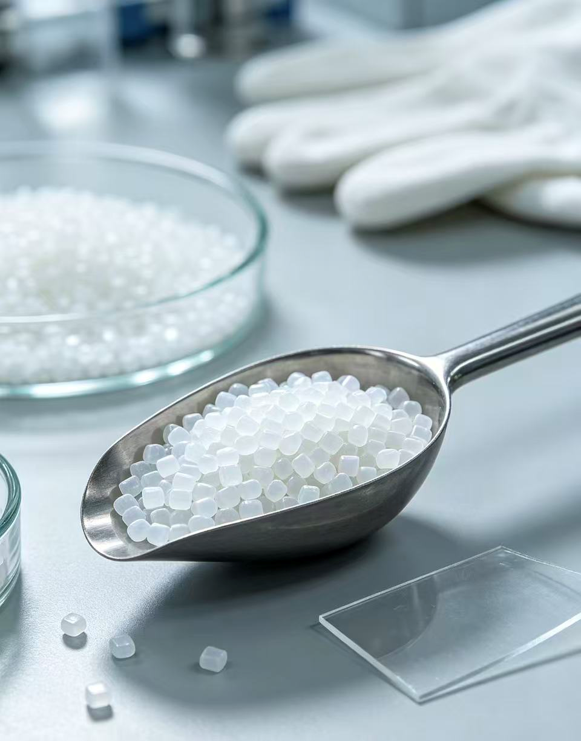
The application scope of twin-screw extruders is super wide. It covers various industries like polymer synthesis, material modification, and chemical recycling of waste plastics. The main and well-established applications are divided into four major categories:
Polyolefin graft modification: Produce graft materials like PP – g – MA (polypropylene grafted maleic anhydride). These materials are often used as compatibilizers in the production of multilayer co-extruded sheet products.
Continuous polymerization production: You can directly synthesize new materials like TPU elastomers, degradable PLA, and PA prepolymers online without using traditional reaction vessels. The production efficiency is much higher.
Nanocomposite modification: Through in-situ reactions, fully combine fillers like nano titanium dioxide and talc powder with resin, which can significantly improve the mechanical strength and barrier properties of the materials.
Chemical depolymerization and recycling of waste plastics: In a controllable reactive extrusion environment, break the molecular chains of waste plastics and turn them back into reusable monomers. In this way, you can achieve the recycling and regeneration of plastics.
The modified pellets produced through reactive extrusion are super applicable. They can be directly combined with various subsequent processes like sheet pressing, injection molding, and blow molding to form a complete closed-loop plastic production line.
Can the same twin-screw extruder be used alternately for ordinary mixing and reactive extrusion production?
Yeah, it can, but the equipment configurations for the two production modes are different. The screw combination, vacuum exhaust system, and the whole feeding accessory need to be readjusted. In a nutshell, the reactive extrusion process requires a longer mixing section and must be equipped with a multi-stage exhaust structure. It has much higher requirements compared to ordinary physical mixing equipment.
How to tell if the reactive extrusion process is effective and if the conversion rate meets the standard?
The most straightforward way is to test the samples and measure the grafting rate, melt flow index, and volatile content of the pellets. Also, if there are abnormal fluctuations in the die head pressure during production, it means the reaction state is unstable and the process hasn’t been properly adjusted. If you need to customize a special screw structure and complete process parameters according to your own formula, WYLONG can provide one-stop technical matching services for the twin-screw production line.
Why do plastic sheets made from reactive modified particles tend to have bubbles?
The main reason is that the vacuum evaporation process during extrusion isn’t thorough enough, leaving a small amount of volatile small-molecule substances in the material. The solution is pretty simple: just appropriately extend the screw mixing structure of the exhaust section or increase the vacuum negative pressure, and the problem of bubble formation in the sheets can be completely eliminated.
This article comprehensively introduces the complete operation plan of the reactive extrusion process for the co-rotating twin-screw extruder, covering the equipment working principle, standard process parameters, standardized start-stop operations, process optimization techniques, and various industrial application scenarios. It clearly explains the actual operation process of the reactive extrusion from start to finish.
Whether it’s small-scale formula debugging in the laboratory or large-scale continuous polymerization production in the factory, as long as the equipment is properly configured and the process parameters are accurate, the reaction conversion rate can be stably increased, raw material waste can be reduced, long-term equipment wear can be decreased, and production costs can be saved.
The whole process design fully considers the reaction rate, material heat resistance, and compatibility with subsequent molding processes. It can not only meet the requirements of independent modification and pelletizing production lines but also match the complete plastic extrusion production chain. A reliable equipment manufacturer can customize screw modules, multi-stage vacuum systems, and precise weight-loss feeding solutions according to the customer’s production formula, workshop space, and production capacity requirements. In this way, the problem of parameter mismatch can be fundamentally avoided, and there’s no need to repeatedly modify and debug the equipment after it arrives.
If you’re planning to build a new reactive extrusion production line or upgrade your existing twin-screw extruder for projects like grafting modification, continuous polymerization, and waste plastic recycling, feel free to contact the WYLONG technical team. We’ll customize the screw structure, temperature curve, and workshop layout of the whole production line according to your raw material formula and downstream pelletizing and sheet production requirements, fully meeting all your needs for continuous reaction production.

Our professional team of technical experts provides services for your needs around the clock time.