×
×



In today’s packaging landscape, product safety, shelf life extension, and brand appeal are non-negotiable—whether for food, pharmaceuticals, industrial supplies, or daily chemicals. Among the most transformative innovations powering modern packaging is multi-layer co-extruded films. Far more than a passing trend, these films address the limitations of traditional single-layer films by integrating specialized functions into a unified structure. This guide will break down what multi-layer co-extruded films are, their manufacturing process, core advantages, key applications, and the critical role of plastic extrusion equipment—helping you understand why they’ve become indispensable for modern packaging needs.
The multi-layer co-extrusion process builds on the basic plastic film extrusion process with enhanced precision and complexity:
Multiple Extruders: Each extruder is dedicated to a specific plastic material (e.g., PE for flexibility, EVOH for oxygen barrier, nylon for strength).
Specialized Die Design: A co-extrusion die combines the molten plastics into a layered structure, ensuring uniform thickness and tight adhesion between layers.
Precise Process Control: Temperature, pressure, and extrusion speed are rigorously controlled to maintain layer integrity and desired performance (e.g., barrier efficiency, flexibility).
Dependence on Equipment: The quality of the final film directly relies on the precision of plastic extrusion equipment—from screw design to die engineering.
| Advantage | Muti-layer Co-Extruded Films | Single-Layer Films |
| Barrier Performance | Excellent: Blocks oxygen, moisture, light, and odors | Poor: Single materials (e.g., PE) lack comprehensive barrier properties. |
| Mechanical Strength | High: Tear-resistant, puncture-proof, and durable—ideal for transportation and heavy-duty use. | Limited: Sacrifices strength for flexibility (e.g., PE) or vice versa (e.g., nylon). |
| Functional Versatility | Customizable: Layers can be tailored for breathability (produce), sealability (snacks), or chemical resistance (daily chemicals). | One-dimensional: Only offers the properties of a single material. |
| Cost-Effectiveness | Long-term savings: Eliminates the need for additional coatings or laminations; reduces product waste from spoilage. | Short-term savings: Low upfront cost but higher long-term expenses due to performance gaps. |
The largest application sector, covering:
Critical for drug safety and stability:
Designed for durability and protection:
Ideal for personal care and cleaning products:
High-quality multi-layer co-extruded films depend on advanced plastic extrusion equipment—here’s what matters most:
Key factors to consider:
Layer Capacity: Choose machines that support your required layer count (3-layer, 5-layer, 7-layer, or more).
Material Compatibility: Ensure the machine can handle your target plastics (e.g., PE, PP, EVOH, nylon, biodegradable polymers).
Production Speed & Efficiency: Match the machine’s output to your volume needs (e.g., meters per minute).
Quality Control Features: Look for integrated thickness sensors and automated adjustment capabilities to reduce waste.
What are the differences between multilayer films and co-extruded films?
Multilayer films refer to any films with multiple layers. Co-extruded films are a type of multilayer film where all layers are simultaneously extruded through a mold.
How many layers can a co-extruded film have?
This depends on the machine. Some machines can produce films with 3 layers, 5 layers, 7 layers or even more.
Is the co-extruded film more expensive than the single-layer film?
The initial cost of the machine is higher. However, in the long run, the co-extruded film may be more cost-effective as it offers better performance.
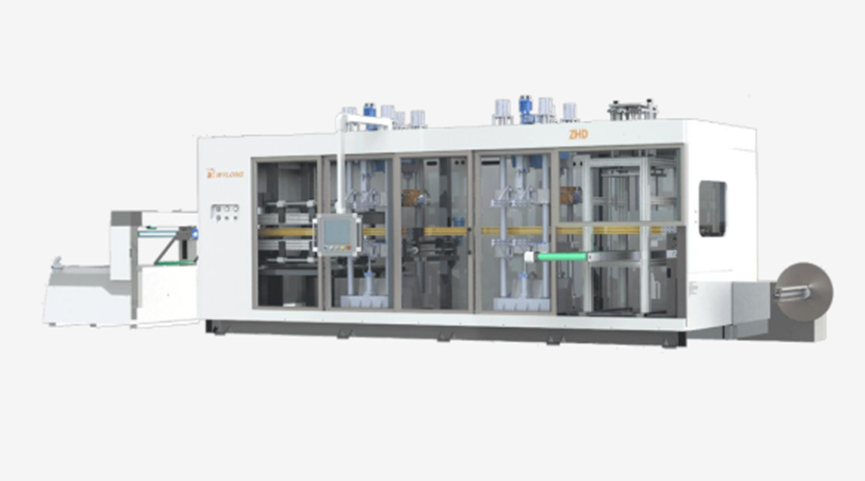
Why is WYLONG a good choice for multi-layer extrusion equipment?
WYLONG is a leading manufacturer of plastic extrusion equipment. They are renowned for their high-quality machines, precise engineering designs, and excellent customer service. Their plastic sheet extrusion lines are designed to produce top-quality multi-layer co-extruded films with stable performance.
Multi-layer co-extruded films are the backbone of modern packaging, solving the functional limitations of single-layer films by integrating barrier protection, strength, flexibility, and customizability into one seamless structure. From extending food shelf life and ensuring pharmaceutical safety to protecting industrial goods and enabling branded daily chemical packaging, their versatility makes them indispensable across sectors.
The quality of these films hinges entirely on plastic extrusion equipment—precision engineering, material compatibility, and process control are non-negotiable for consistent results. WYLONG’s multi-layer extrusion machines and plastic sheet extrusion lines are designed to meet these demands, combining advanced technology with user-friendly operation to help manufacturers produce high-performance co-extruded films efficiently.
Ready to upgrade your packaging with multi-layer co-extruded films or invest in reliable extrusion equipment? Contact WYLONG today for a free quote, customized technical consultation, and detailed equipment specifications tailored to your application and production needs.

Our professional team of technical experts provides services for your needs around the clock time.

 Optimized by Seraphinite Accelerator