×
×



A thermoforming machine is one of the most versatile and widely used production tools in plastic manufacturing. But even with advanced thermoforming equipment, issues such as uneven thickness, bubbles, deformation, or cracking can appear—and when they do, production efficiency and product quality take an immediate hit.
This guide offers a complete and highly practical approach to thermoforming process troubleshooting, covering real production scenarios, quick diagnostic methods, and proven techniques to improve efficiency and reduce material waste. Whether you’re producing packaging, industrial parts, or thin-walled containers, this resource will help you stabilize your thermoforming operations and get more value out of your machine.
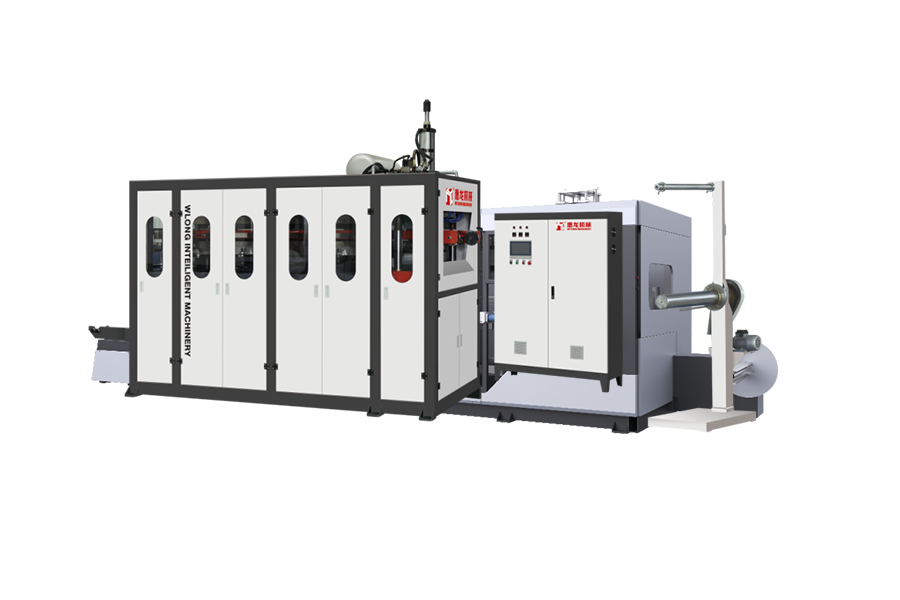
Thermoforming troubleshooting is the systematic process of identifying, analyzing, and resolving faults that occur during plastic sheet forming. It focuses on optimizing the interaction between materials, heating systems, mold structure, vacuum or pressure control, and cooling performance.
Prevents production downtime
Reduces scrap rate and material waste
Improves product consistency and forming precision
Ensures long-term stability of your plastic thermoforming machine
Supports higher throughput without sacrificing quality
Troubleshooting is essential not only for fixing issues—but also for scaling production with confidence.
Root causes:
Non-uniform sheet heating
Incorrect mold temperature
Improper vacuum/pressure distribution
Material thinning due to excessive stretching
Possible results:
Weak structural points, deformation, reduced load capacity.
Scratches caused by:
Dirty molds
Sheet contamination
Improper handling
Bubbles caused by:
Moisture trapped inside the sheet
Overheating
Insufficient pre-drying
Common reasons:
Insufficient cooling time
Inadequate mold release angles
Poor mold venting
Removing parts before temperature stabilization
Likely triggers:
Excessive stretching at corners
Low sheet temperature or cold spots
Sharp mold transitions
Material brittleness
Key issues: thickness variation, bubbles, poor clarity
Fixes:
Ensure uniform heating across all zones
Dry plastic sheets before forming
Maintain clean mold surfaces
Fine-tune vacuum pressure for faster air evacuation
Key issues: warping, edge cracking, slow cooling
Fixes:
Increase heating duration for full sheet penetration
Use high-pressure forming for large parts
Extend or balance cooling cycles
Reinforce mold edges and reduce sharp transitions
Key issues: tearing, deformation, poor stacking stability
Fixes:
Precisely control temperature to avoid overheating
Use food-grade mold release agents
Apply rapid cooling to lock product shape
Keep mold cavities clean to maintain surface quality
Quick Troubleshooting Table
| Scenario | Troubleshooting Focus | Common Faults | Recommended Fixes | Material Tips | Machine Settings Tips |
|---|---|---|---|---|---|
| Packaging Products | Heating uniformity | Bubbles, uneven thickness | Clean molds, adjust heating zones | Control sheet moisture | Recalibrate vacuum pressure |
| Thick-Walled Industrial Parts | Heating + cooling | Cracking, warping | Extend heating, slow cooling | Use tougher plastics | Increase forming pressure |
| Thin-Walled Food Containers | Temperature precision | Tearing, deformation | Rapid cooling, clean molds | Use thin-gauge plastics | Fast cycle time tuning |
Temperature, forming pressure, and cycle timing must remain consistent.
Regular checks prevent unexpected breakdowns and extend your thermoforming machine’s lifespan.
Use high-quality sheets, store them properly, and pre-dry when needed.
Skilled operators diagnose early-stage issues and reduce defects.
Use production data to predict issues and refine settings.
Automating key processes greatly boosts repeatability and production speed.
Intelligent sensors for real-time temperature feedback
Automatic vacuum/pressure control
Software-based heating zone management
Faster changeovers for multi-product manufacturing
Multi-zone ceramic or infrared heating
Faster heating response time
Reduced energy consumption
More uniform temperature distribution
Real-time dashboards for machine health
Early detection of anomalies
Historical data for root-cause analysis
Remote monitoring for large-scale factories
Why do defects appear only in certain sections of thermoformed parts?
Localized issues such as uneven heating, mold temperature variations, and poor venting often cause defects to appear only in specific areas.
How to balance speed and product quality?
Optimize cycle times with precise heating and cooling—fast enough for efficiency, but stable enough to protect material integrity.
Can troubleshooting reduce material waste significantly?
Yes. Early fault detection and optimized machine settings can dramatically reduce scrap rates.
What role does mold design play?
It affects material flow, demolding ease, cooling speed, and final surface quality—making it a critical part of troubleshooting.
Is automation necessary for efficient thermoforming?
Not required, but highly beneficial. Automation boosts speed, consistency, and production stability.
Effective thermoforming process troubleshooting is the key to stable production, higher output, and lower material waste. By understanding common defects, applying targeted solutions, and upgrading your thermoforming systems, you can significantly improve both efficiency and product quality.
For manufacturers seeking high-performance forming solutions, WYLONG provides advanced thermoforming machines, plastic thermoforming equipment, and intelligent process optimization systems designed for modern production environments. Whether you need to stabilize your current process or upgrade to a more efficient machine, WYLONG delivers reliable technology backed by expert technical support.
Ready to optimize your thermoforming production? Contact WYLONG for professional guidance and customized thermoforming solutions that boost efficiency and cut costs.

Our professional team of technical experts provides services for your needs around the clock time.

 Optimized by Seraphinite Accelerator