×
×



Deep draw thermoforming is widely used to produce food containers, trays, cups, industrial parts, and many other packaging products that require a deep cavity and stable structure. Choosing the right material is one of the most important steps in achieving good forming results. A suitable material helps maintain thickness during stretching, prevents cracking, and ensures that the final part meets the needs of the application. As demand for high-quality packaging continues to grow, manufacturers using WYLONG’s multi-station thermoforming machines need materials that work well with high-precision forming, fast cycle speeds, and stable heating performance. Understanding how different plastics behave during deep draw forming helps factories make better decisions and avoid costly production problems.
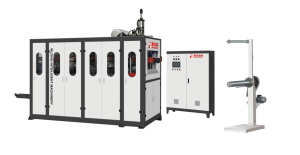
Deep draw thermoforming is a forming process where a heated plastic sheet is stretched into a deep mold cavity using vacuum, pressure, or mechanical assistance. Compared with shallow forming, deep draw requires the sheet to stretch farther while keeping enough wall thickness and strength. When the sheet is not suitable for deep stretching, defects such as thinning, tearing, whitening, or uneven wall thickness can occur. This is why picking the right plastic material is essential. Deep draw forming is commonly used in food packaging cups, yogurt containers, deep trays, and industrial insert trays. WYLONG’s thermoforming machines, such as the ZHD and ZHS series, support deep draw forming with materials like PP, PET, PS, PLA, ABS and more.
| Cooling System | How It Works | Best For | Advantages | Limitations |
| Water Bath Cooling | Sheet moves through a water tank for fast heat removal | Thick sheets, high-heat materials | Strong cooling speed, low cost | Water marks, drying needed, less glossy surface |
| Air Cooling | Strong airflow cools sheet without contact | Thin PET/PLA/PP sheets, clean surfaces | No contact marks, clean and simple | Slower cooling, not ideal for thick sheets |
| Roll Cooling (Chill Roll) | Hot sheet is pressed and cooled between chilled rollers | High-clarity sheets, precise thickness | Best surface finish, very stable thickness, high-speed lines | Higher cost, more setup and maintenance |
For deep draw forming, the material must stretch without breaking or thinning too quickly. A plastic with good melt strength can maintain its shape and thickness as it is pulled into deep cavities. If the material is too brittle or weak, it will crack or lose uniformity during forming.
Different materials soften at different temperatures. If the forming temperature is too low, the sheet will resist stretching. If it is too high, the material may sag excessively or lose stability. Choosing a plastic with a suitable and stable forming temperature makes deep draw forming smoother and helps maintain good wall thickness.
Deep draw products often need to resist impacts, stacking pressure, or daily handling. Some plastics crack easily after deep stretching, especially under cold conditions. Selecting a material with good impact resistance helps avoid product failures after forming.
Some applications demand high clarity, smooth surfaces, or strong color expression. Others require a matte finish or better scratch resistance. The chosen sheet should match the appearance expectation of the final product, especially for food packaging and consumer goods.
The working environment influences material selection. For example, hot-fill food containers need heat resistance, medical trays may need chemical resistance and certification, and outdoor products require UV resistance. Understanding where and how the product will be used helps ensure the material performs well throughout its lifecycle.
| Material | Deep Draw Performance | Key Advantages | Typical Applications | Notes |
| PET | Strong deep draw ability | High clarity, good strength, stable wall thickness | Food trays, clear containers | Works best with chill roll cooling; good for WYLONG PET extruders |
| PP | Very good stretchability | Flexible, good heat resistance, lightweight | Cups, hot-fill containers, microwave-safe products | Forms well on WYLONG multi-station machines |
| HIPS/PS | Moderate deep draw | Easy forming, low cost, stable performance | Disposable trays, general packaging | Best for shallow–medium depth products |
| ABS | High deep draw strength | Rigid, impact-resistant, durable | Industrial parts, consumer goods | Works well with high-pressure thermoforming |
| PLA & Bio-Based Sheets | Moderate deep draw | Eco-friendly, food-safe | Sustainable packaging | Needs precise temperature control on WYLONG equipment |
PET is one of the best materials for deep draw when clarity and surface quality are important. It has good melt strength, excellent transparency, and strong impact resistance. PET maintains stable wall thickness during stretching and is ideal for food packaging and high-clarity containers. WYLONG’s parallel twin-screw PET extruder line produces PET sheets with consistent quality, making them easy to form into deep products.
PP is a common choice for deep cups, microwave-safe containers, and products requiring heat resistance. It is flexible and stretches well, making it suitable for deeper cavities. PP also cools slowly, giving it more time to form evenly in multi-station thermoforming machines like WYLONG’s ZHD series.
HIPS or PS is widely used for medium-depth trays and disposable packaging. It forms easily, heats quickly, and has stable performance during stretching. While it may not be as strong as PP or PET, it is cost-effective and suitable for large-volume production.
ABS is a high-strength, rigid material suitable for deep industrial parts and consumer product components. It maintains thickness well during deep draw forming and offers excellent impact resistance. WYLONG’s thermoforming machines can handle ABS sheets with stable heating and strong forming pressure.
With rising demand for sustainable packaging, PLA and bio-based materials are becoming more common. PLA has moderate deep draw capability and works well for eco-friendly food containers. However, it requires more precise temperature control. WYLONG’s machines are designed to support bio-material forming by using stable heating systems and efficient cooling setups.
Deep draw forming requires sheets with consistent thickness and good stability. Thicker sheets generally allow deeper forming, but even thin sheets can be used if they are produced with uniform gauge control. Materials like PET and PLA must be properly dried before extrusion to avoid bubbles and weak spots. Using high-quality sheets from stable extrusion lines—such as WYLONG’s ZHP, ZHPET, or biodegradable extruder series—helps ensure better forming performance and reduces scrap.
Improving deep draw performance involves controlling temperature, matching the mold design with the material, and adjusting the forming cycle. A stable heating system helps soften the sheet evenly. Proper pre-stretching can guide the material into deep areas without creating thin spots. Clean mold vents allow air to escape, helping the material form fully. Keeping consistent cooling temperature also helps maintain shape and reduce stress. When these factors work together, the result is a smooth and stable deep draw process.
Selecting the right material is one of the most important decisions in deep draw thermoforming. Each plastic behaves differently, and matching the material with the product needs helps ensure strength, appearance, and long-term performance. PET offers clarity and strong deep draw ability, PP provides flexibility and heat resistance, HIPS gives easy forming with low cost, ABS delivers strength for industrial use, and PLA supports eco-friendly applications. With high-quality sheet extrusion and stable thermoforming equipment like WYLONG’s multi-station thermoforming machines, factories can achieve better results, fewer defects, and higher efficiency. If you need support with material selection or machine configuration, the WYLONG team is always ready to help you find the best solution for your production needs.

Our professional team of technical experts provides services for your needs around the clock time.

 Optimized by Seraphinite Accelerator