×
×



Scrap rate is one of the most important indicators in thermoforming production. When scrap is high, material cost goes up, production slows, and product quality becomes unstable. Reducing scrap helps factories save money, improve efficiency, and keep output consistent. Many factories face common problems such as uneven heating, forming defects, trimming errors, and unstable machine performance. With the right technology and daily practices, these issues can be controlled. WYLONG’s multi-station thermoforming machines are designed for stable heating, accurate forming, and fast cycle speeds, which help factories maintain low scrap rates and achieve better production results.
Scrap in thermoforming refers to any material that does not become part of the final product. This includes sheet edges, trimming waste, test sheets, and defective parts. Scrap may come from heating problems, poor mold venting, unstable vacuum pressure, sheet sagging, or trimming inaccuracy. A small change in machine settings or sheet quality can increase scrap quickly. Understanding where scrap comes from is the first step to controlling waste and improving productivity.
Modern thermoforming machines use more advanced heating systems, sensors, and process control functions to help lower scrap rates. Multi-zone heating keeps temperatures balanced across the sheet. PLC control systems adjust vacuum timing, pressure, and cooling automatically to maintain forming stability. High-precision molds reduce defects by giving the sheet a clear path during forming. Accurate automatic trimming systems reduce over-cutting and help maintain consistent product shape. WYLONG’s thermoforming machines include these technologies to help factories achieve stable and efficient production with less waste.
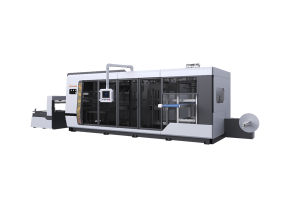
Uneven heating is one of the main reasons for thinning, webbing, and incomplete forming. Keeping all heating zones balanced helps the sheet soften evenly, especially for materials like PET and PP. Regular checking of heater output and temperature sensors can prevent sudden heating changes.
The sheet is the foundation of every thermoformed product. When sheet thickness varies or the material is unstable, defects appear more easily. Using stable, high-quality sheets from a reliable extrusion line reduces scrap directly. WYLONG’s PET, PP, and PLA extruder lines produce sheets with consistent thickness, which helps thermoforming run smoothly.
Vacuum timing affects how the sheet fits the mold. When vacuum comes too early, the sheet may wrinkle. When it comes too late, the forming may be incomplete. Proper pressure and smooth vacuum flow help the sheet form deep areas without thinning. Adjusting these settings for each material improves forming quality.
Blocked mold vents trap air, which prevents the sheet from fully forming into the mold. This leads to soft corners, chill marks, or surface defects. Cleaning vents regularly keeps air flow smooth and reduces forming failures.
When the clamping frame is loose, the sheet sags unevenly. This leads to thin areas or unexpected stretching. A strong, even frame tension keeps the sheet flat and improves thickness control during deep forming.
Trimming mistakes create a lot of unnecessary waste. Sharp blades, clean cutting tools, and accurate trimming alignment help reduce scrap and improve overall product quality. Proper setup before each batch also reduces defects.
Worn-out parts, blocked cooling channels, unstable heaters, or vacuum leaks all increase scrap. Regular maintenance checks help the machine stay stable and reduce sudden issues during production. Many factories reduce scrap simply by maintaining heaters, vacuum pumps, and mold surfaces more frequently.
Skilled operators can spot problems earlier and adjust settings faster. Training operators to understand common defects such as thinning, burning, underforming, and trimming errors, helps reduce scrap and improves consistency across shifts.
| Tip | What It Helps With | Key Idea |
| 1. Keep Heating Zones Balanced | Prevents thinning, webbing, and uneven forming | Maintain stable, even sheet temperature across all zones |
| 2. Use High-Quality & Consistent Plastic Sheets | Reduces defects caused by material variation | Choose sheets with uniform thickness and stable properties |
| 3. Optimize Vacuum Timing & Pressure | Improves forming accuracy and deep cavity results | Adjust vacuum start time and pressure level for each material |
| 4. Clean Mold Vents Regularly | Prevents air traps and incomplete forming | Keep vents clear to ensure smooth vacuum flow |
| 5. Maintain Proper Frame Tension | Reduces sheet sag and thickness variation | Strong, even clamping helps the sheet stay stable during heating |
| 6. Improve Trimming Accuracy | Reduces over-trimming and scrap waste | Use sharp blades and correct alignment for clean cuts |
| 7. Perform Regular Preventive Maintenance | Avoids machine instability and unexpected defects | Check heaters, vacuum pumps, mold surfaces, and cooling channels |
| 8. Train Operators on Defects & Adjustments | Prevents human errors and improves consistency | Skilled operators respond faster to quality issues |
Reducing scrap is not only about machine technology but also about consistent daily practices. Below are eight practical tips factories can use to control waste and improve efficiency.
Reducing scrap in thermoforming requires a combination of stable technology, good material quality, and consistent production practices. When heating, vacuum pressure, frame tension, and trimming are controlled well, scrap naturally decreases. Using high-quality sheets and well-maintained machines also ensures smoother production. WYLONG’s multi-station thermoforming machines are designed for stable heating, accurate forming, and high efficiency, making them a reliable choice for factories that want lower scrap rates and higher productivity. If your production needs support with reducing scrap or choosing the right machine, our team at WYLONG is always ready to help you build a more efficient and cost-effective thermoforming line.

Our professional team of technical experts provides services for your needs around the clock time.

 Optimized by Seraphinite Accelerator