×


Thermoforming is a processing technology that heats plastic sheets to a plastic state, forms them into preset shapes through molds, and then cools and shapes them. It has the advantages of high efficiency, low cost and wide adaptability, and is widely used in the field of biodegradable plastic products. Biodegradable plastics have narrow thermal processing windows, are easy to decompose when overheated, and difficult to form when underheated, which puts forward higher precision requirements for temperature control of forming equipment.
Thermoformer is the core carrier of this process, and its temperature control accuracy directly affects the forming effect of biodegradable materials. Many manufacturers often encounter problems such as brittle products, incomplete forming, and material yellowing during production, most of which are caused by improper temperature calibration. This guide will focus on calibrate plastic thermoforming machine temp for biodegradable plastics, providing a complete set of operable solutions for actual production.
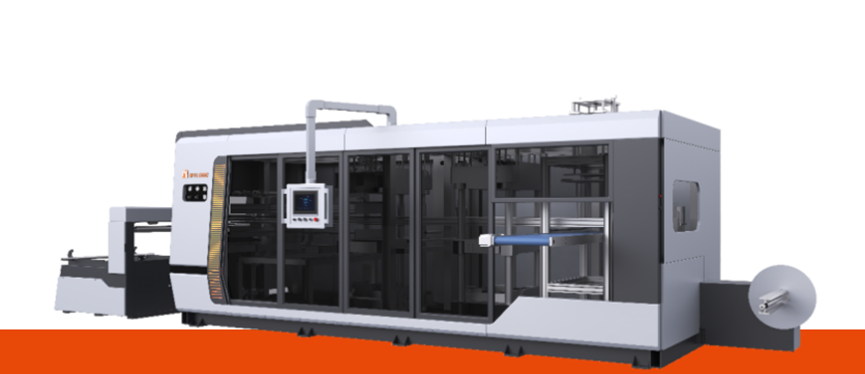
As the core equipment of the forming process, plastic thermoforming machine integrates heating, clamping, forming, cooling and trimming functions. Its core value lies in providing stable and controllable thermal environment and mechanical pressure, ensuring that plastic sheets complete the forming process according to process parameters. For biodegradable materials, the uniform heating system and precise temperature adjustment function of the equipment are particularly critical, which directly determines whether the material can be heated evenly without thermal decomposition.
Common biodegradable plastics for thermoforming molding mainly include PLA, PHA, starch composite materials, etc. These materials have low glass transition temperature, narrow thermal processing range, and are extremely sensitive to temperature changes. Unlike traditional PP, PET and other materials, biodegradable plastics will accelerate molecular decomposition when the temperature exceeds the processing range, resulting in product strength decline, discoloration and other problems; if the temperature is too low, the sheet cannot be fully plasticized, and it is easy to crack and incomplete forming during the forming process.
The complete plastic thermoforming process includes four key steps: sheet heating, clamping and fixing, vacuum/pressure forming, cooling and demolding. Temperature runs through the whole process, among which the heating zone temperature determines the plasticizing degree of the sheet, the mold temperature affects the cooling shaping speed and product deformation rate, and any link of temperature deviation will affect the final product quality. For biodegradable materials, the temperature matching of each link is more demanding, and precise calibration is the prerequisite for smooth production.
Improper temperature settings of forming equipment will bring a series of production risks for biodegradable plastics. If the temperature is too high, the material will undergo thermal decomposition, releasing harmful gases, resulting in product brittleness, yellowing, reduced service life, and even scrapping the entire batch of sheets; if the temperature is too low, the sheet plasticity is insufficient, the stretching resistance increases, it is easy to appear incomplete forming, local thinning, cracking and other defects, and the product qualification rate drops sharply. In addition, uneven temperature distribution will lead to inconsistent shaping of different parts of the product, affecting subsequent assembly and use.
Standard thermoformer temperature calibration for biodegradable plastic process can bring obvious production advantages. Firstly, it avoids material thermal decomposition and insufficient plasticizing, greatly reduces production scrap rate and saves material costs; secondly, it ensures the consistency of product shape, strength and surface quality, improves product qualification rate and production stability; meanwhile, accurate temperature control can optimize production cycle, improve processing efficiency without affecting product quality, and extend the service life of thermoforming equipment heating components.
Before formal production, standardized temperature calibration must be carried out, and the specific steps are as follows:
Preheat preparation: Turn on the Thermoforming Machine, set the preliminary temperature according to the material characteristics, preheat the equipment for 30-60 minutes, and wait for the temperature of each heating zone to stabilize.
Temperature detection: Use a professional contact temperature sensor to detect the actual temperature of each heating zone, heating plate and mold surface, and record the deviation between the displayed value of the equipment and the actual temperature.
Deviation correction: Enter the equipment parameter setting interface, adjust the temperature compensation value according to the detection results, so that the actual temperature is consistent with the process required temperature.
Stability test: Keep the equipment running for 20 minutes, detect the temperature again, confirm that the temperature fluctuation is within ±5℃, and meet the processing requirements of biodegradable materials.
Trial production verification: Use a small number of sheets for trial forming, adjust the temperature slightly according to the trial product effect until the product forming is complete and free of defects.
For different types of biodegradable materials, targeted calibration adjustments are required. The following is the recommended temperature calibration range for common materials:
| Biodegradable Material | Optimal Heating Temp | Mold Temp | Calibration Fluctuation Range |
| PLA | 80-110℃ | 30-50℃ | ±3℃ |
| PHA | 90-120℃ | 35-55℃ | ±4℃ |
| Starch-based Composite | 75-100℃ | 25-45℃ | ±5℃ |
During calibration, focus on the uniformity of heating zone temperature, avoid local overheating, and ensure that the sheet is heated evenly. For large-format plastic thermoforming machine, it is necessary to detect the temperature of multiple points on the heating plate to eliminate regional temperature differences.
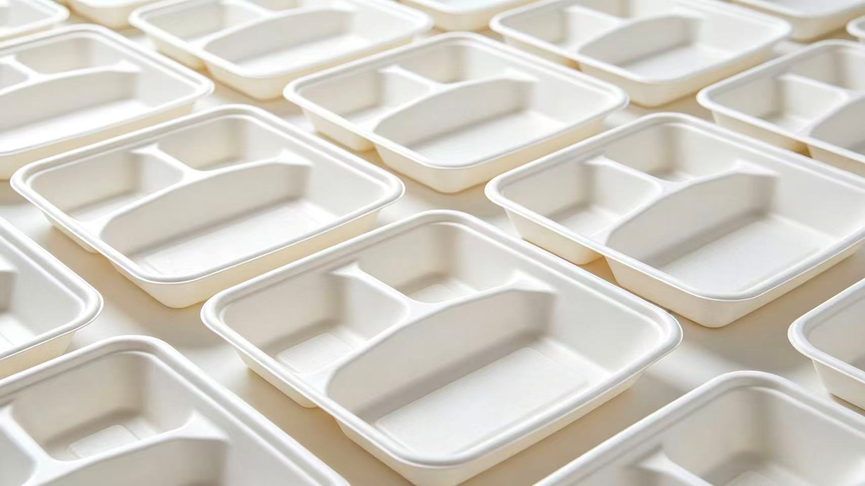
plastic thermoforming process temp adjustment for biodegradable resins needs to follow the principle of gradual adjustment, avoid large-scale temperature changes in a short time. For amorphous biodegradable resins, appropriately increase the heating temperature appropriately to ensure full plasticizing; for crystalline biodegradable resins, control the heating temperature within a lower range to prevent material crystallization and decomposition. When replacing different types of biodegradable materials, the temperature must be recalibrated instead of directly using the original process parameters.
In addition, according to the thickness of the sheet to adjust the temperature: thin sheets reduce the heating temperature appropriately to avoid overheating decomposition; thick sheets appropriately increase the temperature or extend the heating time to ensure internal and external plasticizing consistency.
Master thermoforming temperature setting tips for biodegradable materials can further optimize production efficiency: first, set segmented heating parameters, divide the heating process into preheating, plasticizing and constant temperature stages, and match different temperatures to achieve uniform heating; second, link temperature and heating time, appropriately shorten the heating time when the temperature is slightly higher, and avoid long-term high-temperature heating of materials; finally, keep the mold temperature stable, mold temperature too high will extend the cooling cycle, too low will lead to product deformation, adjust according to product thickness and shape.
To maintain the long-term accuracy of equipment temperature, regular inspection and maintenance are essential. Firstly, clean the heating plate and temperature sensor surface regularly to remove plastic residue and dust, avoid affecting temperature detection accuracy; secondly, conduct a comprehensive temperature calibration every 1-3 months, record and track the temperature deviation trend of the equipment; meanwhile, check the aging degree of heating components regularly, and replace damaged heating tubes and sensors in time; finally, do a good job in equipment maintenance records, and adjust the maintenance frequency according to production intensity.
When screening thermoforming machine for sale equipment, priority should be given to models with professional temperature control systems for biodegradable plastics. Focus on the following core features: equipped with multi-zone independent temperature control system, to ensure uniform heating; using high-precision temperature sensor, temperature control accuracy within ±3℃; with temperature compensation and automatic constant temperature function, reduce manual calibration frequency; supporting segmented temperature programming, adapting to the processing needs of different biodegradable materials. High-quality temperature control configuration can greatly reduce the difficulty of later calibration and improve production stability.
How often should I calibrate the temperature of the thermoforming machine for biodegradable plastics?
It is recommended to conduct a preliminary calibration before each new material trial production, and a comprehensive calibration every 1-3 months during continuous production; if the equipment is moved, heated components are replaced, calibration should be carried out immediately.
Can the temperature parameters of traditional plastics be directly used for biodegradable plastics?
No, biodegradable plastics have narrower thermal processing windows, and their temperature parameters are usually 20-50℃ lower than traditional plastics, so special calibration and setting are required.
What should I do if the biodegradable material decomposes and yellows during forming?
Immediately reduce the heating temperature by 5-10℃, check the uniformity of heating zone temperature, shorten the heating time, and confirm whether the temperature sensor is faulty.
Which brand of thermoforming machine has better temperature control performance for biodegradable plastics?
WYLONG thermoforming machines are equipped with high-precision temperature control systems, which are specially optimized for biodegradable plastic processing, and the temperature calibration is more accurate and stable.
Temperature calibration is the core link of biodegradable plastic thermoforming production, which directly affects product quality, material utilization rate and production efficiency. Mastering calibrate plastic thermoforming machine temp for biodegradable plastics methods, combining material characteristics and equipment performance to carry out standardized calibration and adjustment, can effectively solve common problems such as material decomposition and insufficient forming, and realize efficient and stable production of biodegradable plastic products.
For manufacturers focusing on green plastic processing, choosing thermoforming equipment with excellent temperature control performance is the foundation of stable production. With professional temperature control technology and reliable equipment quality, WYLONG helps enterprises easily cope with the processing challenges of biodegradable plastics and boost the development of sustainable manufacturing.
If you encounter temperature calibration problems in actual production, or need to customize temperature control solutions for biodegradable plastic processing, please feel free to contact our team for professional technical consultation and targeted equipment solutions!

Our professional team of technical experts provides services for your needs around the clock time.