×
×



Cooling is one of the most important steps in plastic sheet extrusion. Even when the plastic is melted and formed correctly, the sheet must cool in a stable and controlled way to get the right thickness, surface finish, and strength. A good cooling system helps factories run faster, reduce defects, and keep the sheet quality consistent.
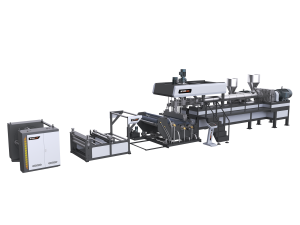
At WYLONG, our plastic sheet extruder lines are designed for PP, PS, PE, PET, PLA, and bio-materials, so choosing the right cooling method is a key part of getting the best result from your production line.
Cooling has a direct effect on the final sheet. When cooling is too slow or uneven, problems like warping, stress marks, waves, or low transparency may appear. When cooling is too fast, the sheet may shrink, bend, or lose its strength. Good cooling helps:
A stable cooling system is essential for modern packaging materials, especially PET, PLA, and bio-based sheets that require more precise temperature control.
| Cooling System | How It Works | Best For | Main Advantages | Main Limitations |
| Water Bath Cooling | Sheet passes through a water tank for fast cooling | Thick sheets, high-heat materials | Strong cooling, low cost, good for heavy-gauge sheets | Possible water marks, needs drying, less glossy surface |
| Air Cooling | Strong air flow cools the sheet without contact | Thin sheets, clean surface needs | No contact marks, simple, clean, good for thin PET/PLA | Slower cooling, not ideal for very thick sheets |
| Roll Cooling (Chill Roll) | Hot sheet is pressed and cooled between chilled rollers | High-clarity sheets, precise thickness control | Best surface finish, stable thickness, supports high speed | Higher equipment cost, more setup and maintenance |
Water bath cooling is one of the most common methods for thick and heat-sensitive sheets. The sheet passes through a water tank, and the water quickly pulls heat away from the material.
Advantages:
Limitations:
Air cooling uses strong air flow to cool the sheet without touching it. This is common for thin, light, or clear materials.
Advantages:
Limitations:
Roll cooling is the most precise option. The hot sheet is pressed between chilled steel rollers. This method controls both cooling and surface finishing at the same time.
Advantages:
Limitations:
This cooling method is used in many WYLONG extruder lines, especially PET and PLA extrusion systems, where clarity and surface flatness are important.
Choosing the best cooling system depends on your material, production goals, and the type of sheet you want to produce. For example, PET, PLA, and bio-based materials often perform best with roll cooling because they need stable temperature control and smooth surface finishing. PP and PS sheets are more flexible and can use water or air cooling depending on thickness. Thick sheets generally cool better with water, while thin sheets benefit from air knives that avoid surface marks. If your application requires high transparency or a glossy finish, roll cooling is usually the best choice. Production speed also matters. Factories aiming for high output tend to use chill roll systems because they allow faster line speeds and stable cooling. The layout of your factory and maintenance capability may also influence your decision. Some factories prefer the simplicity of air cooling, while others choose advanced chill roll systems for higher-quality demands.
Each cooling system has strengths and limitations, and understanding them helps you match the right method to your production needs. Water bath cooling offers strong and fast cooling, which makes it effective for thick or high-temperature sheets, but the water can leave marks and adds a drying step. Air cooling is clean, simple, and contact-free, making it ideal for thin PET, PLA, or PP sheets, but its cooling speed is slower and it may not handle heavy-gauge sheets well. Roll cooling stands out for its excellent surface finish, stable thickness, and ability to support high-speed production. However, it requires higher investment and more setup work. In general, water cooling fits heavy sheets, air cooling fits thin sheets, and roll cooling fits applications requiring precise surface quality.
To get the best results from your cooling system, focus on stable temperatures and clean equipment. Keeping the cooling temperature consistent from start to finish helps prevent warping and uneven shrinkage. Cleaning the rolls, water tanks, and air knives regularly ensures smooth heat transfer and prevents contamination that can mark the sheet. Matching the cooling rate with the extrusion temperature is also important, especially for PET and bio-materials, which are sensitive to sudden temperature changes. Avoid rapid cooling shocks, as they can create internal stress. Checking roll pressure and alignment frequently also helps maintain uniform thickness. Even small adjustments can solve common quality issues and improve the overall stability of the extrusion line.
Cooling is a key part of plastic sheet extrusion and has a big influence on sheet quality, production speed, and machine stability. Water cooling, air cooling, and roll cooling each have their own advantages, and the best choice depends on your material, thickness, and production goals. WYLONG designs high-efficiency extrusion equipment that supports different cooling systems for PP, PS, PE, PET, PLA, and bio-based materials. With the right cooling method and the right machine, you can achieve better sheet quality and higher output. If you need help selecting the best cooling setup for your project, our team is ready to provide support and guidance for your production needs.

Our professional team of technical experts provides services for your needs around the clock time.

 Optimized by Seraphinite Accelerator