×
×



In today’s fast-growing packaging and corrugated industry, choosing the right laminating equipment directly impacts your production efficiency, product quality, and overall operating cost. Flute laminators—used to bond cardboard, corrugated sheets, and various paper-based materials—play a crucial role in modern packaging lines.
A flute laminator is a sheet-to-sheet laminating machine designed to bond printed sheets with corrugated sheets (A, B, C, E flutes, etc.). It enhances stiffness, appearance, and durability—making it ideal for packaging boxes, retail displays, food packaging, electronics cartons, and more. Modern flute laminators vary in their degree of automation. Some rely on manual feeding (semi-automatic), while others feature servo-driven systems, automatic feeders, and intelligent correction modules (fully automatic). Understanding these differences is key before purchasing.
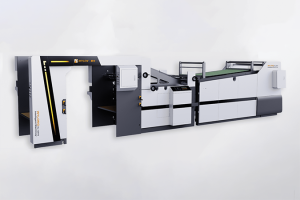
Automation level:
The most fundamental difference between an automatic laminator machine and a semi laminator machine lies in the level of automation. An automatic flute laminator integrates feeding, alignment, laminating, and collecting into a fully automated workflow controlled by PLC, servo motors, and photoelectric sensors. This allows the machine to operate with minimal human involvement and maintain high stability. In contrast, a semi-automatic flute laminator requires operators to manually feed sheets and sometimes manually collect finished products. While it still includes certain automated alignment features, its overall workflow depends heavily on manual operation. This makes semi-automatic equipment more flexible but less standardized and more labor-intensive.
Productivity:
Productivity is where the automatic laminator machine truly stands out. With continuous feeding and synchronized servo-driven systems, automatic flute laminators can achieve significantly higher laminating speeds and output rates, making them ideal for large-scale packaging factories with ongoing orders. Semi-automatic laminators operate at a moderate speed because operators determine the pace of feeding and collecting. This makes them suitable for small-batch, custom, or irregular orders but limits their ability to keep up with high-volume production schedules. For factories aiming to expand, automatic models offer a clear long-term advantage.
Labor Needed:
The difference in labor requirements between the two machine types is considerable. An automatic laminator machine typically requires only one operator to monitor the equipment and manage occasional adjustments. This greatly reduces labor dependency, operator fatigue, and human error. On the other hand, a semi laminator machine requires two to four workers for feeding, positioning, and collecting sheets. Labor becomes a significant part of the operating cost, especially in regions with higher wages. Factories experiencing labor shortages or inconsistent staffing often find automatic machines a more reliable choice.
Precision:
In terms of laminating precision, automatic flute laminators deliver superior accuracy thanks to servo alignment, photoelectric detection, and high-precision registration systems. They ensure that each sheet is positioned consistently, resulting in uniform lamination with fewer defects such as bubbles, wrinkles, and misalignment. Semi-automatic laminators can still achieve decent precision for general packaging, but since manual feeding determines the sheet position, the accuracy varies from one operator to another. For industries where lamination quality directly impacts brand perception—such as cosmetics, electronics, and premium packaging—automatic machines provide a clear advantage.
Consistency:
Automatic laminators maintain exceptional consistency because the entire workflow is controlled by synchronized electronic systems. Whether operating for one hour or an entire shift, they deliver steady laminating quality and predictable results. Semi-automatic laminators, however, show more variation over time. Operator fatigue, changes in technique, or different workers across shifts can all introduce inconsistencies. For factories that value repeatable quality and want to reduce the risk of rework, automatic systems provide long-term stability and reliability.
Investment cost:
When considering initial investment, semi laminator machines have a clear cost advantage due to their simpler structure and minimal automation components. Their lower purchase price makes them appealing for startups or small factories with limited budgets. Automatic laminator machines, by comparison, require more complex control systems, servo motors, and automated modules, resulting in a higher upfront cost. However, for factories with mid- to high production needs, the long-term cost savings from labor reduction and improved efficiency often justify the higher investment.
Best for:
Automatic flute laminators are best suited for large packaging plants, factories handling continuous orders, and industries requiring consistent, high-precision lamination. They are also ideal for companies facing labor shortages or aiming to scale production. Semi-automatic laminators, on the other hand, are a strong fit for small to medium-sized businesses, workshops with variable order sizes, and factories looking for a cost-effective solution with greater operational flexibility. Choosing the right machine ultimately depends on production scale, budget, workforce, and quality requirements.
| Automation Level | Fully automated feeding, alignment, laminating, and collecting controlled by PLC + servo systems | Manual feeding and collecting; partial alignment automation |
| Productivity | High-speed, continuous operation suitable for large-volume orders | Moderate speed; depends on operator efficiency; best for small batches |
| Labor Needed | Requires only 1 operator to monitor the workflow | Requires 2–4 workers for feeding, positioning, and collecting |
| Precision | Sensor-based alignment ensures high accuracy and fewer defects | Accuracy varies based on operator skill and consistency |
| Consistency | Stable laminating quality over long runs with minimal variation | Quality fluctuates due to manual operation and worker fatigue |
| Investment Cost | Higher upfront investment due to advanced automation systems | Lower purchase cost; more budget-friendly for small factories |
| Best For | Large factories, continuous orders, high-precision products, labor-saving operations | Small/medium factories, mixed or custom orders, lower-budget operations |
The performance difference between automatic and semi-automatic flute laminators is most noticeable in speed, precision, and consistency. Automatic laminators operate with fully synchronized feeding and alignment systems, allowing for fast, continuous production with minimal errors. Their servo-driven controls ensure precise sheet positioning and stable laminating quality across long runs. Semi-automatic laminators, relying on manual feeding, naturally run at a slower pace and show more variation in accuracy and stability, especially during long shifts or when different operators are involved. While semi-automatic machines can handle small batches effectively, automatic laminators deliver significantly higher efficiency and more reliable quality for factories with larger or more demanding production needs.
Both automatic and semi-automatic flute laminators have clear advantages, and the right choice depends on your factory size, product type, labor cost, and long-term strategy. If your goal is high precision, stable quality, and lower labor dependency, an automatic laminator machine is ideal. If you need flexibility and low entry cost, a semi laminator machine is a practical choice.
Why Choose WYLONG?

Our professional team of technical experts provides services for your needs around the clock time.

 Optimized by Seraphinite Accelerator