×


For procurement professionals evaluating a Plastic Sheet Extruder or a complete plastic sheet extrusion line, understanding the blown film extrusion process is essential. This guide explains how blown film technology works, how it differs from traditional plastic sheet extrusion, and how to control quality and efficiency in real production. You’ll gain practical insights into raw material preparation, common process issues, efficiency upgrades, and selection considerations—helping you choose the right plastic sheet extruder or blown film extrusion line with confidence.
The blown film extrusion process is a specialized plastic extrusion method used to produce thin plastic films, widely applied in packaging and industrial applications. While often discussed alongside plastic sheet extruder systems, blown film extrusion focuses on tubular film rather than flat sheets.
In this process, plastic pellets are melted inside an extruder and pushed through a circular die to form a tube. The tube is inflated into a bubble, cooled, and flattened into film rolls.
Key characteristics relevant to Plastic Sheet Extruder buyers:
Understanding this process helps buyers clearly distinguish blown film extruders vs. plastic sheet extruders during equipment selection.
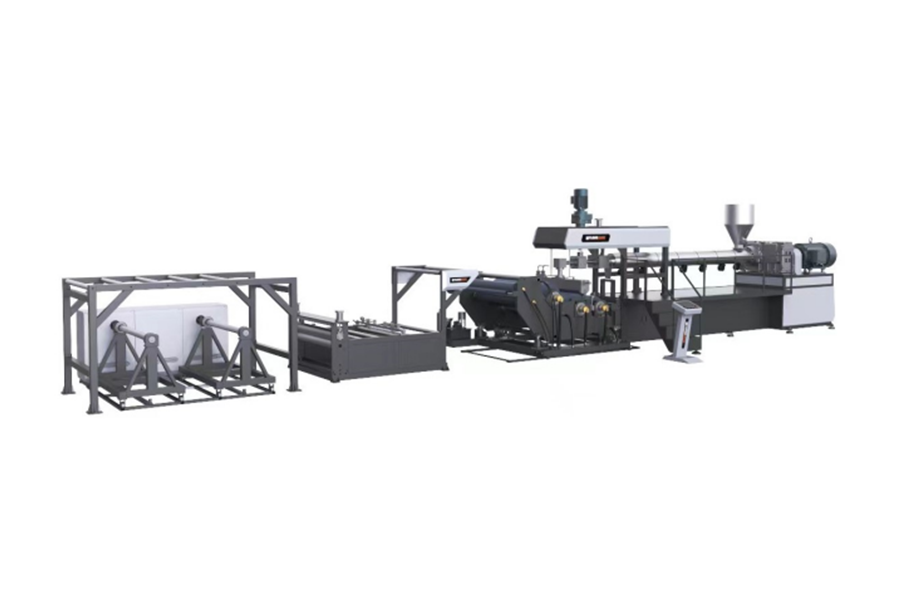
Whether operating a blown film unit or a traditional plastic sheet extruder, raw material control directly impacts product quality and production stability.
Key preparation points include:
For procurement teams, machines that support stable material pretreatment deliver lower scrap rates and better long-term ROI.
Food packaging applications demand strict quality control. Using food-grade PE resins on a plastic sheet extruder or blown film extrusion line ensures:
For heavy-duty industrial packaging, LLDPE films produced on plastic sheet extruder-based systems offer:
Modern plastic sheet extruder and blown film systems increasingly focus on energy efficiency. Proven upgrades include:
Benefits for procurement decision-makers:
| Issue | Main Cause | Recommended Solution | Risk if Ignored | Monitoring Method |
|---|---|---|---|---|
| Film thickness variation | Uneven die gap or melt flow | Regular die calibration | Waste, unstable quality | Thickness gauge |
| Bubble instability | Air pressure fluctuation | Stabilize airflow & cooling | Film breakage | Pressure sensors |
| Gel particles | Resin contamination | Improve filtration & drying | Surface defects | Visual inspection |
| Film wrinkles | Uneven cooling or tension | Adjust haul-off & air rings | Poor appearance | Tension meters |
| Die lines | Die wear or contamination | Scheduled die maintenance | Customer complaints | Visual checks |
This table helps buyers evaluate whether a plastic sheet extruder design supports stable, low-risk production.
Choosing a plastic sheet extruder configured for your target products improves performance and reduces waste.
Even the best plastic sheet extruder requires skilled operation.
Advanced plastic sheet extruders integrate real-time monitoring and automation.
How does blown film extrusion differ from plastic sheet extrusion?
Blown film extrusion produces tubular films using air inflation, while plastic sheet extruders create flat sheets via flat dies and calendering systems.
Can one plastic sheet extruder handle multiple materials?
Yes, many modern systems support PE, LLDPE, PP, and multilayer structures with proper screw and die design.
How can material waste be reduced?
Stable process control, proper material preparation, and operator training are key.
Is energy efficiency achievable without sacrificing quality?
Absolutely. Modern plastic sheet extruder designs reduce energy consumption while improving output stability.
Mastering the blown film extrusion process helps procurement teams make smarter decisions when investing in a Plastic Sheet Extruder or complete extrusion line. By focusing on material preparation, energy-efficient design, intelligent control, and long-term service support, manufacturers can achieve stable quality and lower production costs.
For buyers seeking reliable plastic sheet extruder solutions with strong engineering support, WYLONG provides professionally designed extrusion systems tailored to packaging, industrial, and multilayer film applications. Choosing the right partner ensures not only efficient production today, but scalable performance for future growth.

Our professional team of technical experts provides services for your needs around the clock time.